R4 审计页 — 先设计,后生成筛选
版本:prompt.txt R4(CORE 三段沿用 R3 原文,本轮只改工作流与场景设计)|状态:HOLD,不发布,待外部复审|本轮按指令未做导演风格评分,经典场景继续冻结。
做法(与 R3 的区别)
每图先写拍摄设计记录(人物/摄影机/光源三节)再生成;每图每轮 ≤4 候选、最多两轮;筛选顺序固定为真人感→光线→成像;全部 28 个候选(含淘汰)留档。B2/C2 为局部编辑流(R3 原图+编辑指令),其余为纯文本生成,逐图标注、不混报。裁切图全部取自 1920×1280 原生分辨率,未放大插值。
自评总表(内部口径)
| 图 | 真人感 | 光线与摄影物理 | 摄影成像 |
|---|---|---|---|
| B2 吃面女子(近景) | 过 | 过 | 部分 |
| C2 办公室递文件(双人) | 过 | 过 | 部分 |
| B1 便利店员(近景) | 过 | 过 | 部分 |
| C1 茶餐厅夫妻(双人) | 过 | 过 | 部分 |
| A1 小店门口男子(夜景) | 过 | 过 | 部分 |
| A2 大排档洗碗女工(夜景,原托腮方案废弃) | 过 | 过 | 部分 |
对照 R3 外部审计:真人感/光线两轴由「仅 B2、C2 过」推进到六图全过;成像轴六图仍为「部分」——无一图三轴全过,详见文末未解决问题。
B2 · 吃面女子(近景)
工作流:edit(以 R3 原图为输入+编辑指令)
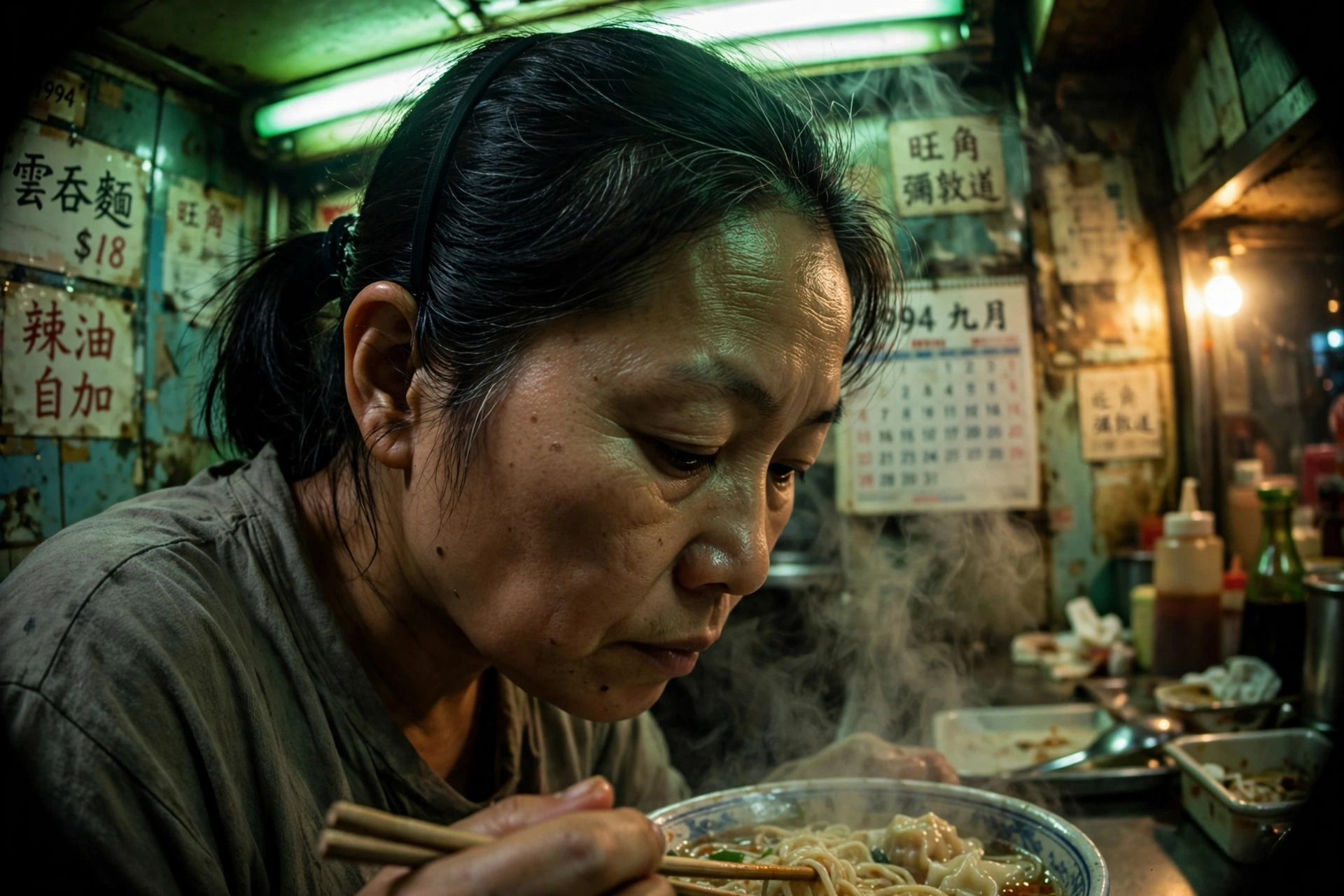
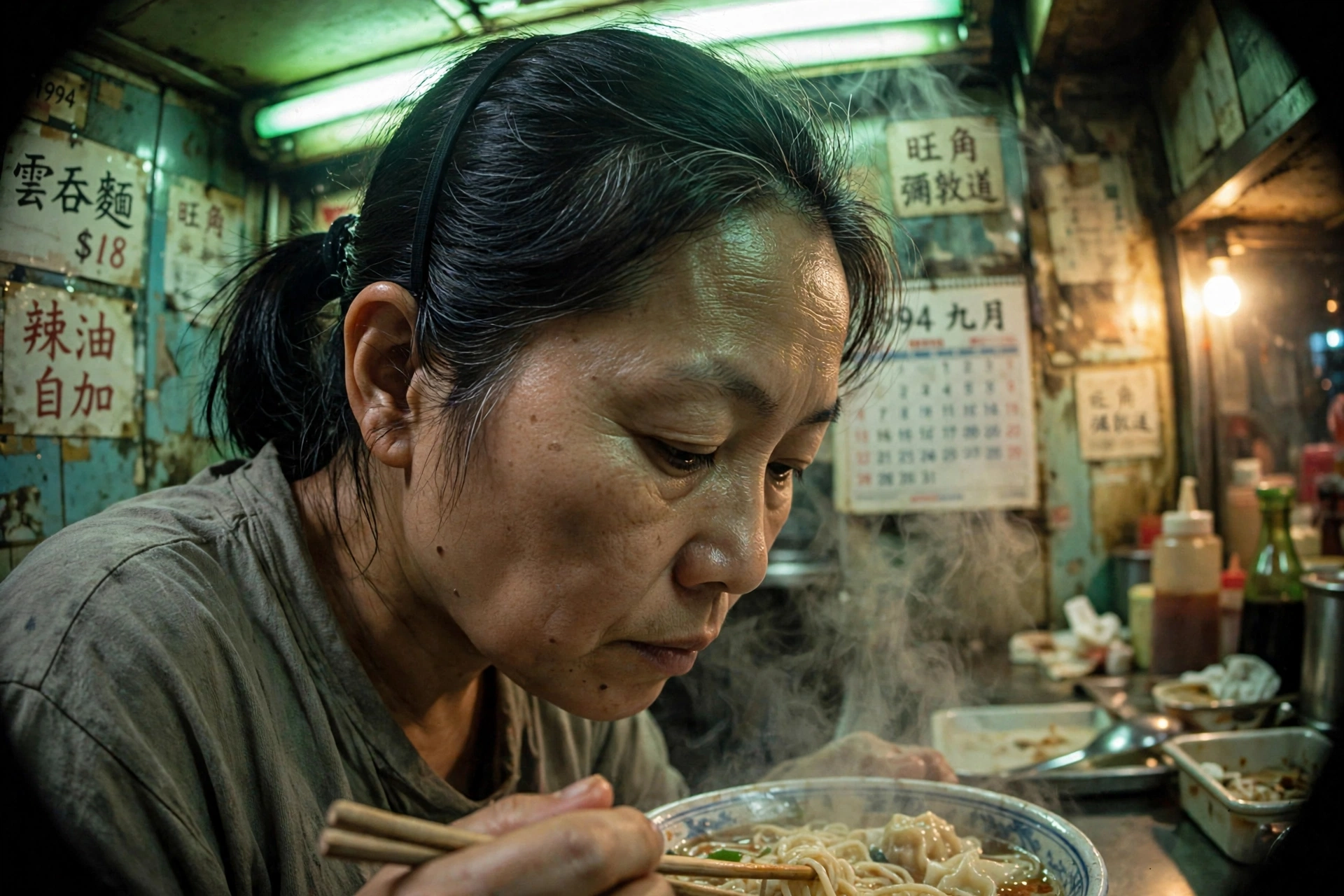
修改说明
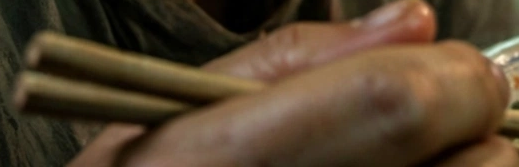
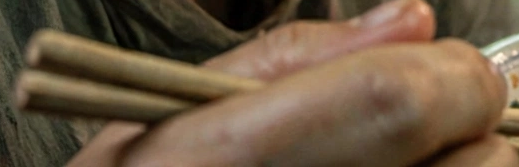
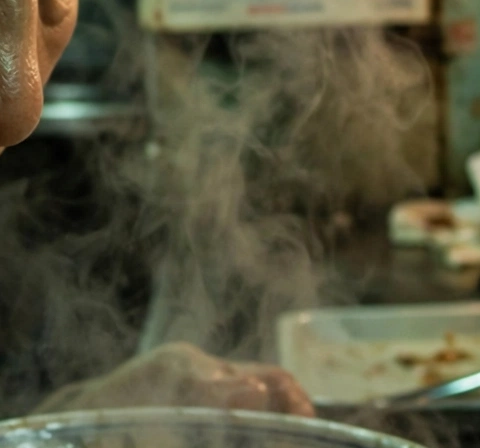
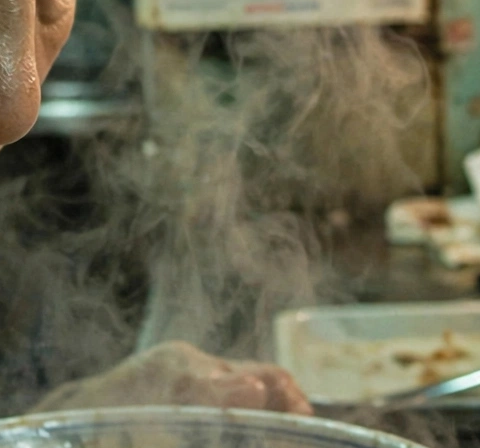
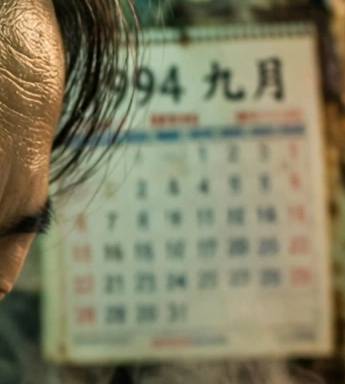
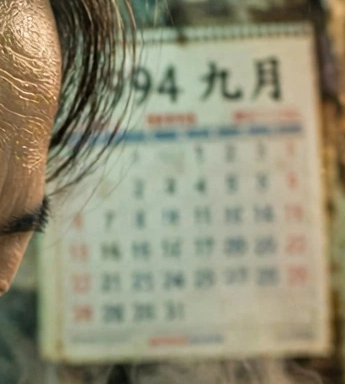
人物行为与荧光+暖光布光冻结不动,只用局部编辑压成像:降面部微反差、统一全图锐度。两轮共 5 次编辑。
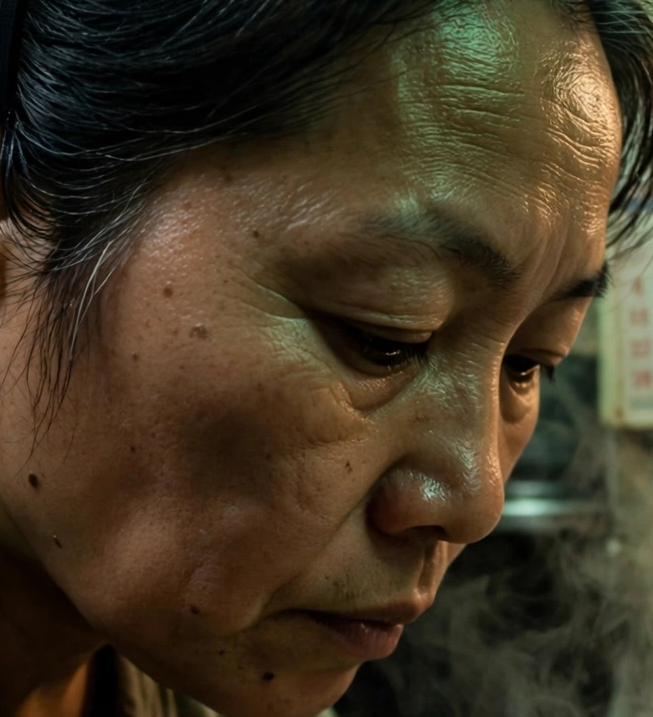
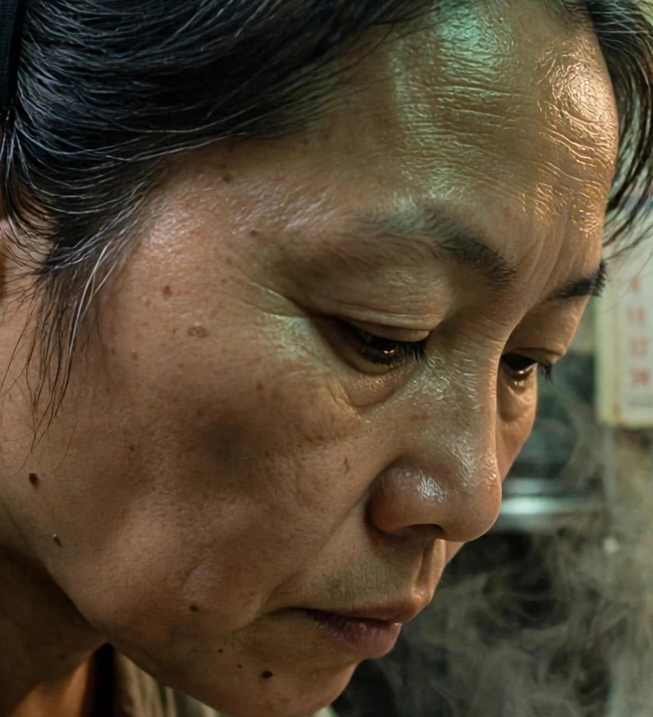
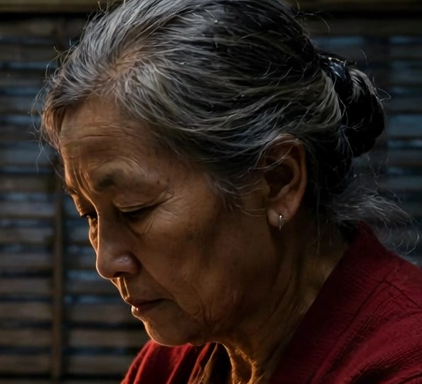
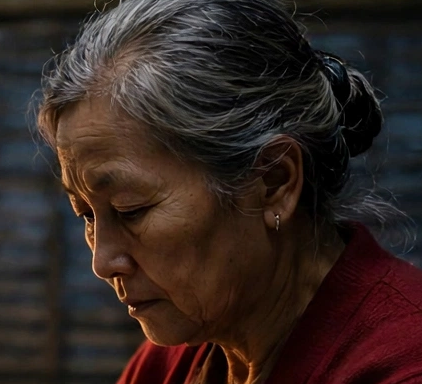
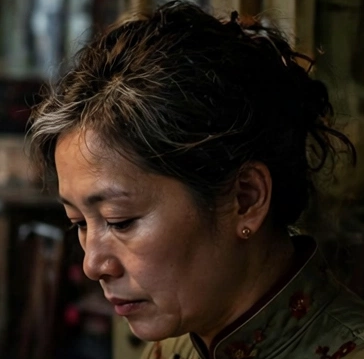
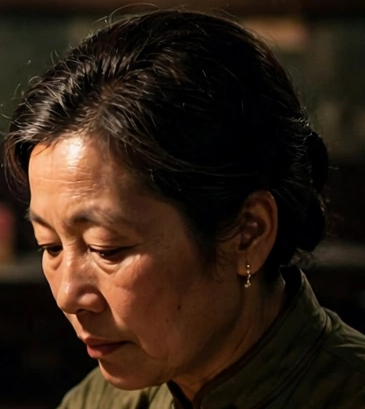
局部放大(原生分辨率裁切,左 R3/右 R4)
三轴自评
| 真人感 | 过 | 低头吃面、年龄感与疲态真实;编辑未改动人物,第一眼仍是真实食客。 |
| 光线与摄影物理 | 过 | 头顶荧光+右侧暖灯的双色关系与衰减、蒸汽受光一致,承 R3 审计的「过」。 |
| 摄影成像 | 部分 | 两轮 5 次编辑后,额面高频微反差与高光硬边仍强于衣物、碗筷——面部与器物不在同一成像强度上。 |
候选与淘汰记录摘要
候选 5(两轮编辑):第 1 轮三张差异极小,r1-1 相对最佳;第 2 轮两张与 r1-1 无可辨差异、未胜出。淘汰因:编辑模型对「降低微反差」响应弱,两轮后按技术上限收官。(逐个记录见随附 screening-log.md)
实际提交的完整提示词
定版(第 1 轮)实际提交的编辑指令全文;输入图为 R3 原图 closeup-b2.webp。第 2 轮指令存 prompts/edit-b2-r2.txt,未胜出。
Edit the attached image. Keep the same woman, the same action — head lowered, eating noodles, chopsticks lifting noodles from the bowl, other hand on the bowl's rim — the same composition, the same green fluorescent light with its warm accent, and the same background. Change only the rendering character: lower the digital microcontrast and sharpening on her face, and give skin, shirt fabric, the noodle bowl, the chopsticks, the steam and the background one single consistent photographic imaging character, as if everything were captured by the same 35mm film lens around one focal plane — no area of the frame sharper or more locally contrasty than the focal plane, and the steam stays soft and natural where it crosses her hand and the bowl. Do not change her face, age, expression or pose; do not beautify or smooth her skin; do not add, remove or rearrange any object.
拍摄设计记录
# 拍摄设计记录 — B2 吃面女子(MODE B / 编辑定向改善)

R3 审计:真人感 过 / 光线 过 / 成像 部分。本图为正向参考,行为与布光**冻结**,只修成像。
工作流:优先 edit(以 R3 原图为输入);编辑不可用时以本设计重生成,设计不得变更。

## 一、人物设计
- 身份:40 多岁亚洲女性,深夜面摊的普通食客,头发随手扎起、夹白发,穿旧衬衫。
- 正在做的事:低头吃一碗云吞面,筷子夹起面条正往嘴边送,另一只手扶着碗沿——动作进行到一半,不是摆好等拍。
- 眼神:只看碗里的食物,因为她在吃东西;绝不看镜头。
- 双手接触物:右手筷子(夹面),左手碗沿。
- 重心/姿态:坐姿,身体前倾,重量压在靠近桌沿一侧,肩背松弛。
- 空间关系:坐在面摊柜台位,脸距碗约一臂;蒸汽在她的脸与镜头之间上升。

## 二、摄影机设计
- 景别/机位:近景,机位在柜台对面、略低于她的视线高度。
- 焦距/机距:约 40mm 等效,机距约 0.8m。
- 景深/焦平面:中等景深;焦平面在脸与碗之间。前景筷子略软,背景招牌柔和可辨但不锐利。
- 清晰度关系(本图整改核心):全图必须只有一种成像特征——皮肤、衬衫、碗筷、蒸汽、背景招牌服从同一个镜头与同一焦平面逻辑,任何区域不得比焦平面更锐、局部反差不得单独跳高(R3 的病:脸部微反差与锐化过强,与衣服/背景不在一个成像系统里)。

## 三、光源设计
- 主光源:头顶两支绿色荧光灯管(冷绿,偏绿约 4100K),自上而下覆盖柜台区。
- 环境反射:右后方厨房一盏裸钨丝灯泡(暖,约 2800K),只给背景与发缘一层暖色反射,是画面唯一的暖色来源。
- 脸部明暗:亮面在前额与鼻梁上部(灯管正下方);下半脸随角度与距离衰减入影;蒸汽被顶光照亮成亮雾。
- 衰减/同一空间:人物与背景(柜台、后墙招牌)由同一组灯管照亮,亮度随距离自然递减;无正面光源,不许补光。
C2 · 办公室递文件(双人)
工作流:edit(以 R3 原图为输入+编辑指令)
修改说明
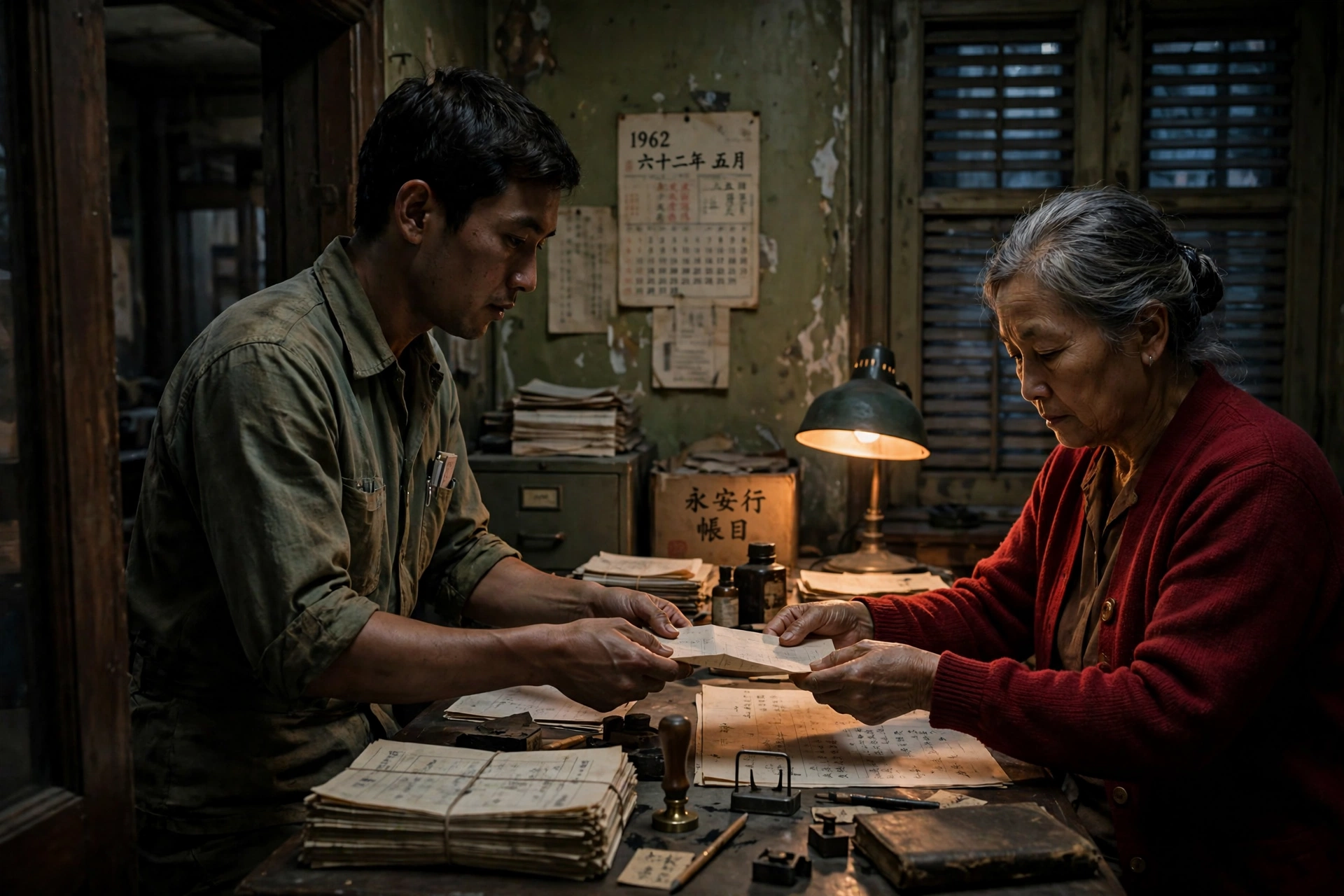
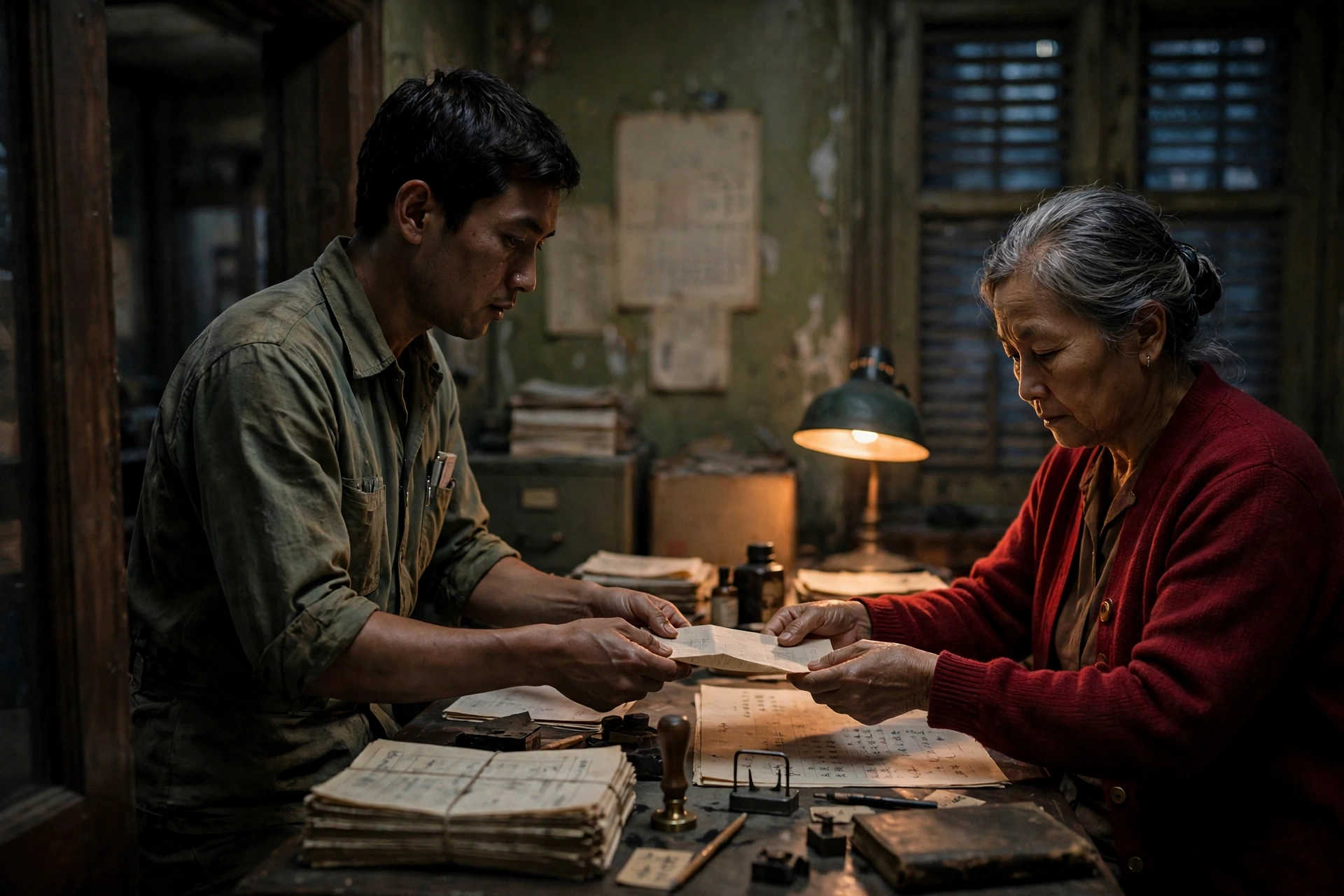
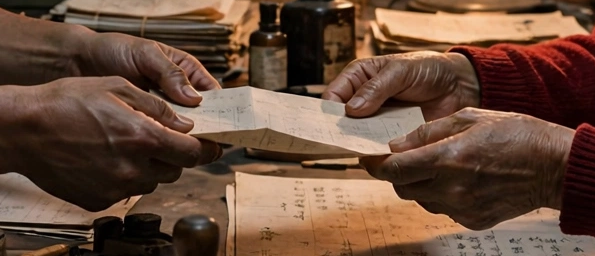
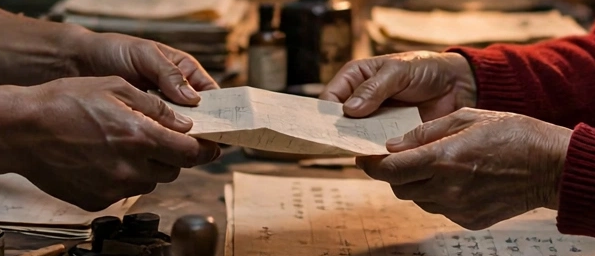
动作与台灯布光保留,只用编辑修三处:手部接触、四手—纸面焦点层次、背景文字去可读化。两轮共 5 次编辑。
局部放大(原生分辨率裁切,左 R3/右 R4)
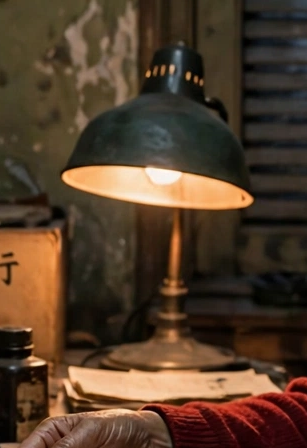
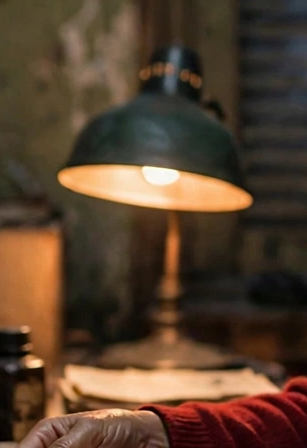
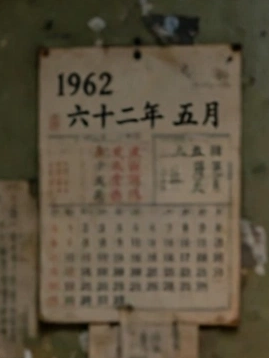
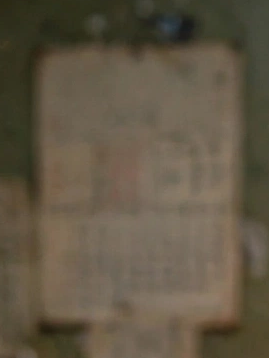
三轴自评
| 真人感 | 过 | 递交中双方视线落纸面、四手接触与纸张受力弯曲成立,无摆拍感。 |
| 光线与摄影物理 | 过 | 台灯单光源:桌面最亮、人物与墙面按距离衰减,承 R3 审计的「过」。 |
| 摄影成像 | 部分 | 后墙日历已化作无字浅色矩形、焦点带收束;但前景账簿手写字仍清晰,全图仍有轻微渲染均匀感。 |
候选与淘汰记录摘要
候选 5(两轮编辑):第 1 轮 r1-1/r1-2 因日历仍可读淘汰、r1-3 次选;第 2 轮 r2-1 定版、r2-2 因日历残留「1962」字形淘汰。(逐个记录见随附 screening-log.md)
实际提交的完整提示词
定版(第 2 轮)实际提交的编辑指令全文;输入图仍为 R3 原图 duo-c2.webp(不在编辑结果上叠编辑)。第 1 轮指令存 prompts/prompt-c2-edit-r1.txt。
Adjust the focus hierarchy of this exact image — change nothing else. The two people, their hands, the desk lamp, the desk and its objects stay exactly where they are, with the same light and colors. Concretely: (1) the wall calendar and every paper pinned on the back wall must lose all legible lettering — keep them as pale, soft-edged rectangles with only the faintest suggestion of print, clearly out of focus; (2) the wooden box behind the desk loses any readable characters the same way; (3) the sheet being handed over keeps a slight bend and soft shadow where the four hands grip it — the grip contact shadows must stay; (4) sharpness now lives only in one band: faces, hands and the handed-over sheet; the open ledger in the foreground and everything on the back wall sit visibly softer than that band. Do not move or resize anything, do not change faces, expressions or skin, do not change the lamp's brightness or the room's darkness, do not add grain or a uniform blur — only deepen the focus falloff and remove background legibility as described.
拍摄设计记录
# 拍摄设计记录 — C2 办公室递文件(MODE C / 编辑定向改善)

R3 审计:真人感 过 / 光线 过 / 成像 部分。动作与布光**保留**,只修:手部交接的接触/握持、焦点层次、台灯衰减、背景文字过精确抢眼。
工作流:优先 edit(以 R3 原图为输入);编辑不可用时以本设计重生成,设计不得变更。

## 一、人物设计
- 身份:20 多岁亚洲男文员(站姿)与 60 多岁亚洲老妇(坐姿,灰发、老手),1962 年香港一间小写字楼/商行办事处。
- 正在做的事:交接一张纸——文员双手捏住纸的下缘递出,老妇双手从下方托接纸的上缘;纸张因双向受力微微弯曲,交接进行到一半。
- 眼神:两人都看着纸,因为这是在办正经事;互不对视,更不看镜头。
- 双手接触物:四只手都只接触这张纸的边缘;指尖有真实的捏压,纸边在指下略变形。
- 重心/姿态:文员站立前倾、重心压向桌沿;老妇坐着、上身略前探。
- 空间关系:两人隔一张木桌相对;台灯在桌面两人之间、偏老妇一侧。

## 二、摄影机设计
- 景别/机位:中景,机位在文员侧后方、平视,构图与 R3 基本一致。
- 焦距/机距:约 85mm 等效长焦,机距约 2.5m,透视平缓。
- 景深/焦平面:焦平面在四只手与纸上(全图最锐处);桌面近处账本略软;背景文件柜、墙上日历进一步变软——文字只成纹理、不可逐字读出,不与主体争夺注意力(R3 的病:背景文字过精确抢眼)。
- 清晰度关系:手/纸 > 人脸 > 桌面物 > 背景,层次分明且服从同一镜头。

## 三、光源设计
- 主光源:桌面一盏绿罩台灯(暖钨丝,约 2700K),位于两人之间,是全图唯一主光——桌面纸面受光最强,两人手部次之,脸部只吃到台灯的斜上反射。
- 环境反射:老妇身后百叶窗漏入的冷昼光(偏冷,约 5600K)只在窗框与她发缘形成低强度轮廓,不照脸、不与台灯争主次。
- 衰减/同一空间:光强随距台灯的距离明确衰减——文件柜、日历所在的后墙明显暗于桌面;脸的暗侧允许细节丢失,不许补光。
B1 · 便利店员(近景)
工作流:text-only(全新拍摄设计)
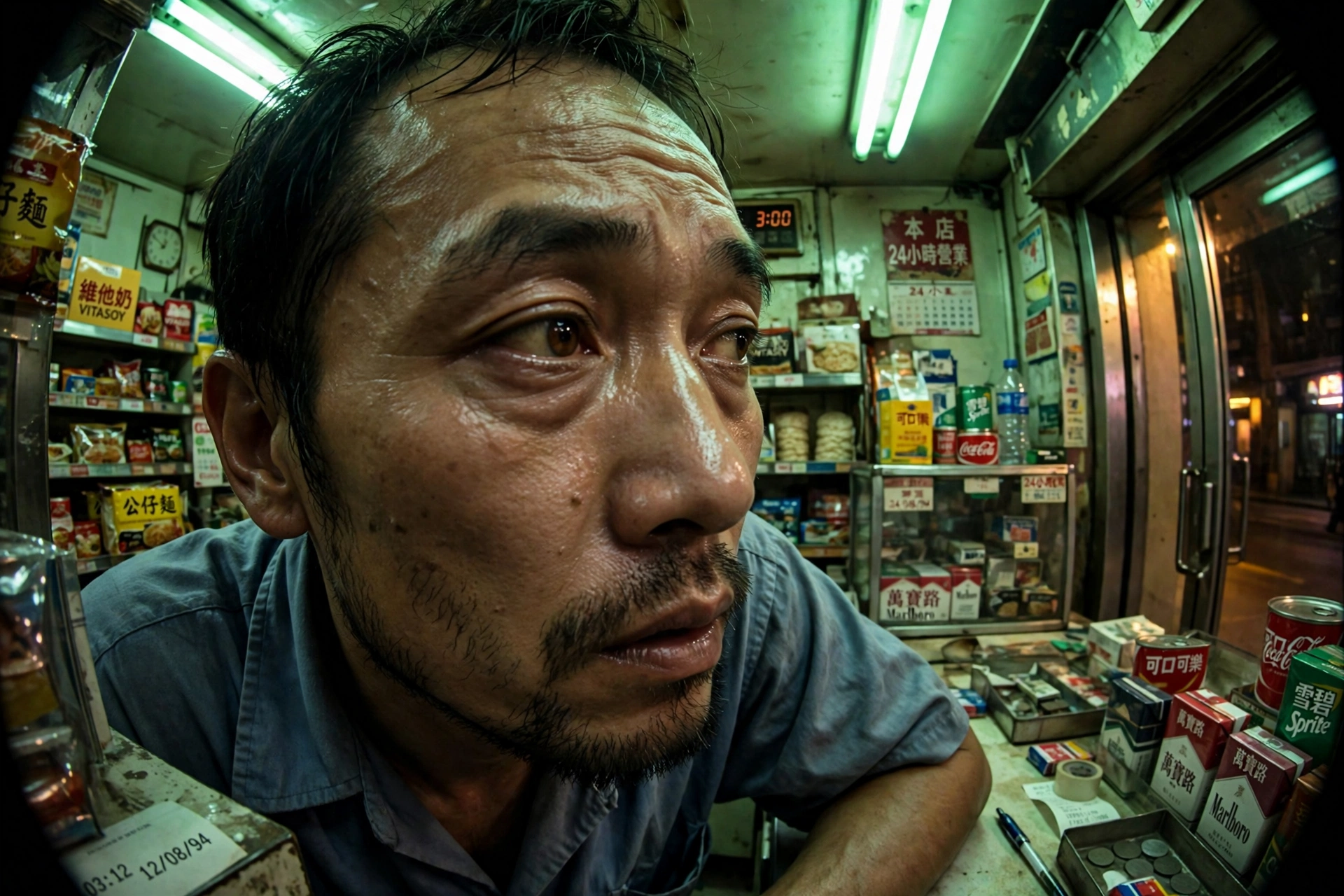
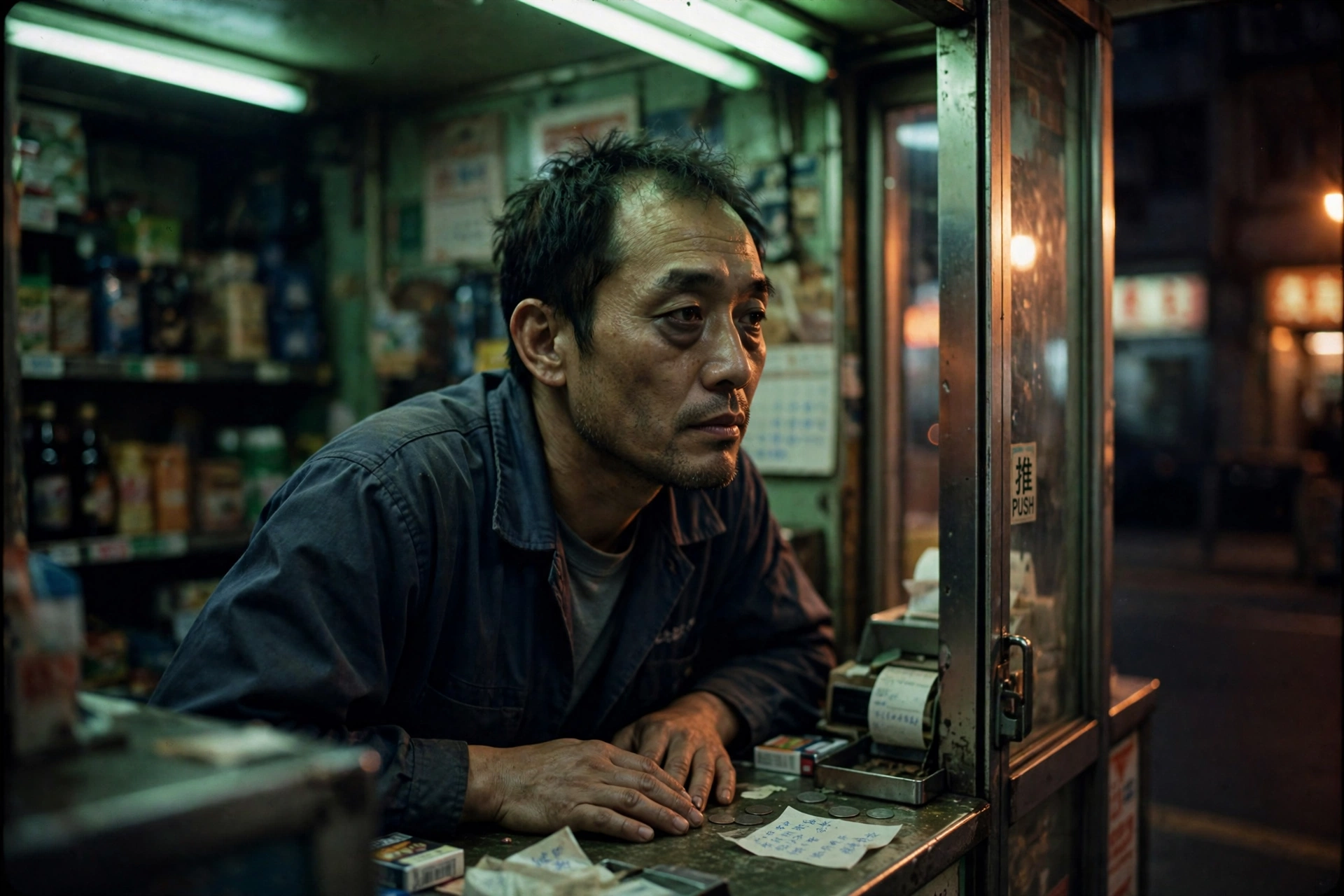
修改说明
摄影机重设:弃超广角贴脸,改 50mm、约 2 米机距,货架退入景深;第二轮再定向压表情戏剧化与面部油光、货架溶为色块。
局部放大(原生分辨率裁切,左 R3/右 R4)
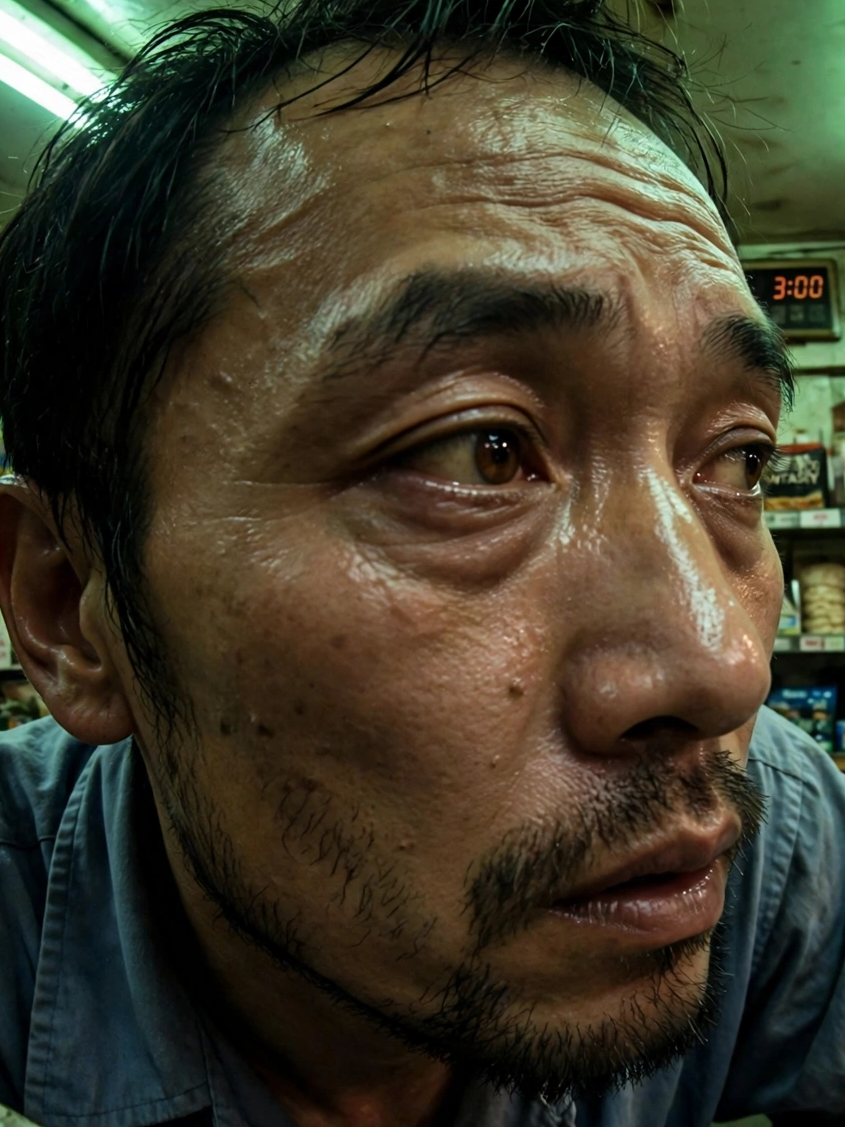
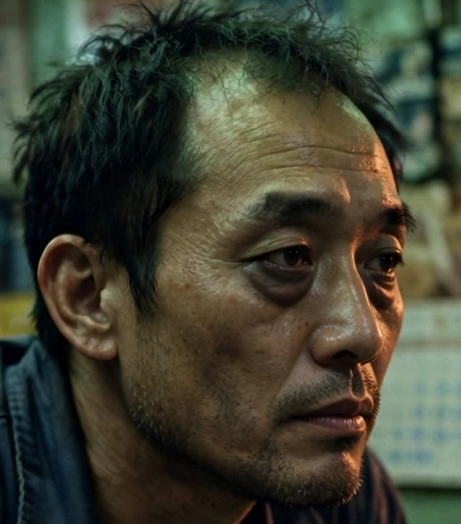
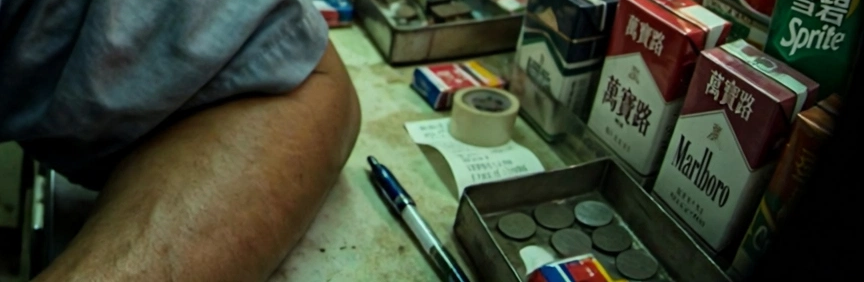
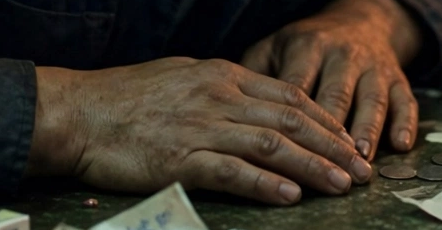
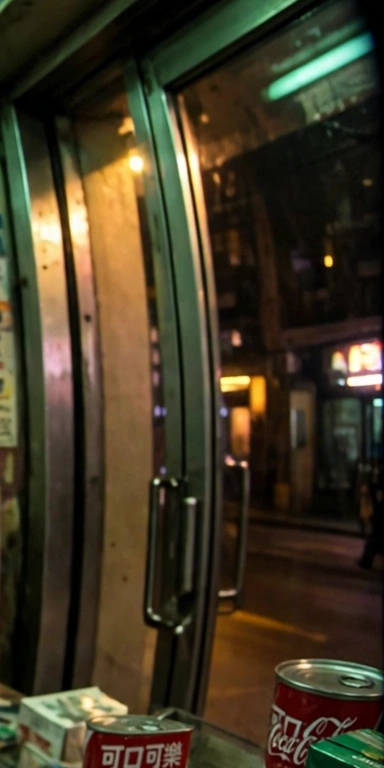
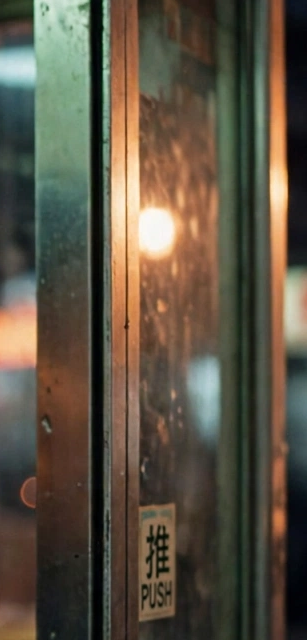
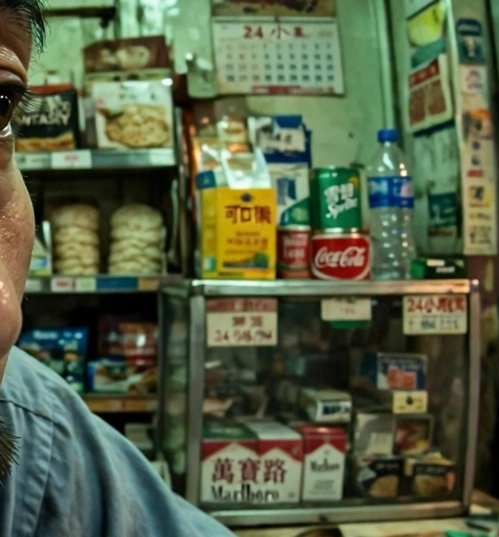
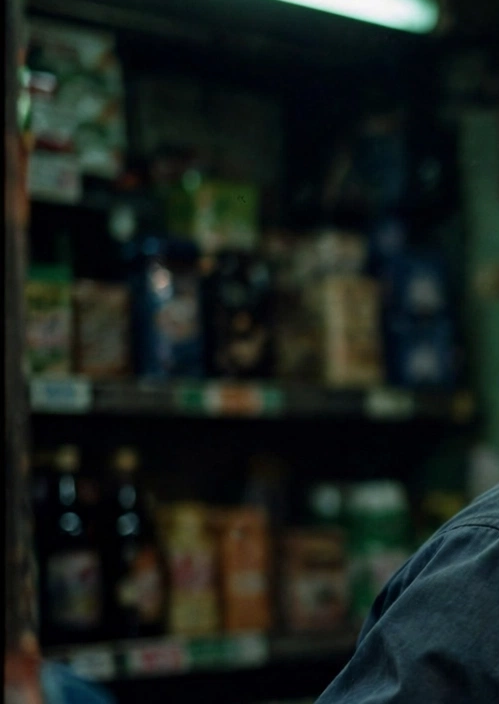
三轴自评
| 真人感 | 过 | 表情中性、闭口平视门口站立顾客高度、双掌压柜台的等待姿态,无表演与摆拍感。 |
| 光线与摄影物理 | 过 | 头顶荧光给主光,门框外街道暖反光给右颊轮廓边光,两源均在场可指认,无无源补光。 |
| 摄影成像 | 部分 | 透视与景深已正常;但额头仍有油光、柜台纸条有半可读字迹,皮肤高频仍略强于衣物。 |
候选与淘汰记录摘要
候选 6(两轮 text):第 1 轮三张均因表情戏剧化+油光淘汰;第 2 轮 r2-1 定版,r2-2 背景重现可读大字招牌、r2-3 油光最重,淘汰。(逐个记录见随附 screening-log.md)
实际提交的完整提示词
定版(第 2 轮)实际提交的完整提示词全文;第 1 轮版本存 prompts/prompt-b1-r1.txt(差异为文末 ROUND 2 REINFORCEMENT 段)。
A candid frame from a 35mm narrative motion picture showing a tired Asian convenience-store night clerk in his late thirties, unshaven with heavy eye bags, standing behind the counter with both palms pressed flat on the counter surface, his weight leaning onto his arms, looking up toward the glass shop door because a customer has just come in, chest-up medium close shot, inside a small Hong Kong convenience store at 3 a.m., Hong Kong, 1994. The camera captures an unposed moment within an ongoing scene, from a physically plausible camera position. Lived-in environmental details. The image should feel like a frame extracted from a film, not a promotional portrait, fashion editorial, or carefully arranged photographic set.
CAMERA: the camera stands where a customer would stand, about two metres away, at eye level, with a normal roughly 50mm lens — perspective is natural, the nose and face keep believable proportions, with no wide-angle enlargement. The focal plane sits on the clerk's face at about f/2.8: the shelves a metre and a half behind him fall clearly out of focus, readable only as soft blocks of colour and bottle shapes, never item by item; a corner of the counter intrudes softly at the frame edge. Nothing behind him is sharper than his face, and the highlights on his forehead, nose bridge and under-eyes stay restrained, without digital HDR local contrast.
LIGHT: two fluorescent tubes on the ceiling just in front of and above him are the only key light — his forehead and the tops of his cheekbones catch them while his eye sockets and jaw fall naturally into shadow and the lower face may stay underexposed. From the glass door at his right, one warm sodium street lamp outside lays a thin warm rim along the right edge of his face, ear and shoulder. There is no light source on the camera side; the camera side of the scene is the dark side.
The subject is a believable, ordinary human actor captured during an unposed moment. Natural facial proportions with subtle asymmetry, individual facial structure, understated expressions and physically plausible body posture. Skin texture varies naturally across the face, with subtle imperfections and realistic tonal transitions under the actual scene lighting. The subject is not posing for a portrait. Facial features, hair and clothing must respond consistently to the same physical light sources. The result must resemble an unretouched frame of a real actor photographed on a motion-picture camera, rather than a digitally perfected face. Every visible highlight and shadow must be consistent with a plausible physical light source within the scene. Use motivated practical lighting with natural distance falloff, believable shadow direction and realistic variation in illumination. Different light sources retain their distinct color temperatures and affect nearby surfaces according to their position and intensity. The subject is not artificially brightened by an invisible frontal fill light. Facial shadows may remain underexposed. Brightness and color are determined by the actual lighting environment, not by a global cinematic color overlay. Preserve natural highlight transitions and the imperfect exposure characteristics of a photographed scene. Natural 35mm motion-picture optical rendering. The plane of focus follows the narrative subject, with physically plausible depth-of-field falloff. Fine detail is preserved near the focal plane and gradually softens away from it. Moderate, irregular photochemical grain varies with exposure and shadow density. Subtle optical halation is limited to strong practical highlights. Avoid the appearance of digital clarity enhancement, HDR tone mapping, artificial microcontrast and cosmetic skin retouching. A cramped Hong Kong urban interior dominated by green fluorescent lighting. A normal lens at a conversational distance observes the subject, so perspective stays natural — the face is neither enlarged nor distorted, and eyes, ears, jaw and hands remain anatomically consistent. Green fluorescent light contaminates skin, walls and shadows at different intensities, with small traces of residual warm color. Bright practical tubes produce irregular optical bloom, while deep green-black recesses retain limited environmental detail. The camera feels handheld and immediate, with imperfect framing and cropped foreground objects. The green is never uniform: it is distributed unevenly through the space and across a single face — forehead and nose bridge catch the tube light while eye sockets and jaw fall away into shadow — each surface lit according to its distance and angle to the actual tubes. Fluorescent light alters the colors of different surfaces unevenly, while imperfect framing and the enclosed space create restless visual tension.

ROUND 2 REINFORCEMENT (these override any conflicting implication above): His expression is completely neutral and unperformed — mouth closed, brow smooth and level, no raised eyebrows, no widened eyes; his gaze is level, aimed at the eye height of a standing customer just inside the door, not upward. His skin is matte and dry: no specular shine or oily highlights on the forehead, nose or cheekbones; skin texture stays coarse and quiet, never glossy. The shelves behind him dissolve further: bottles and packets read only as soft dark shapes and muted color blocks with no readable labels, no legible lettering anywhere behind him. Keep the rest of the design unchanged.
拍摄设计记录
# 拍摄设计记录 — B1 便利店员(MODE B / 重设摄影机,文本重生成)

R3 审计:真人感 部分 / 光线 部分 / 成像 不过。死因:超广角贴脸造成鼻部与前脸比例夸张、全图 HDR 式均匀清晰、背景货架过锐、脸部照明来源不清。本轮**重设摄影机**,弃用 MODE B 原块中的极短焦贴脸句(改写版模式段随提示词一并提交,CORE 不动)。

## 一、人物设计
- 身份:30 多岁亚洲男性,便利店夜班店员,微胡茬、有眼袋,深夜疲态。
- 正在做的事:站在柜台后,双手撑在柜台面上,身体微微前倾,抬头看向刚推门进来的顾客——正在招呼人的半途。
- 眼神:看向店门方向(画面右外),因为有人进来;不看镜头。
- 双手接触物:双掌压在柜台台面上,手指自然张开承重。
- 重心/姿态:站姿,重量压在双臂与柜台之间,肩颈前探。
- 空间关系:他在柜台内侧;货架在他身后约 1.5m;玻璃店门在他右前方,门外是夜街。

## 二、摄影机设计
- 景别/机位:中近景(胸部以上),机位在柜台外、顾客站的位置,平视。
- 焦距/机距:约 50mm 等效的正常焦距,机距约 1.6–2m。**明确禁止广角贴脸**:鼻子与脸的比例必须符合正常镜头在正常距离的透视。
- 景深/焦平面:约 f/2.8 等效;焦平面在他的脸上。身后货架必须明显变软——只剩色块、瓶罐轮廓与大字招牌的模糊形状,不得逐件可辨;柜台前景一角可略入画并虚化。
- 清晰度关系:全图只有一个焦平面系统;脸的局部对比受控,额头、鼻梁、眼下不出现 HDR 式的高光爆点与过强微反差。

## 三、光源设计
- 主光源:天花板两支荧光灯管,位于他头顶偏前(冷绿),是脸部照明的唯一主来源——亮面在前额与颧骨上部,眼窝与下颌自然入影,脸的下半部允许欠曝。
- 环境反射:右侧玻璃门外一盏钠汽街灯(暖橙,约 2200–3200K)从门的方位给他右脸缘、耳廓与肩部一条暖色边光;店内深处货架只吃到灯管的余光。
- 衰减/同一空间:货架与人物同受灯管照亮,但因距离更远、又在景深之外,呈柔和暗部;无正面光源,摄影机方向是暗面,不许出现无法解释的正面亮脸。
C1 · 茶餐厅夫妻(双人)
工作流:text-only(全新拍摄设计)
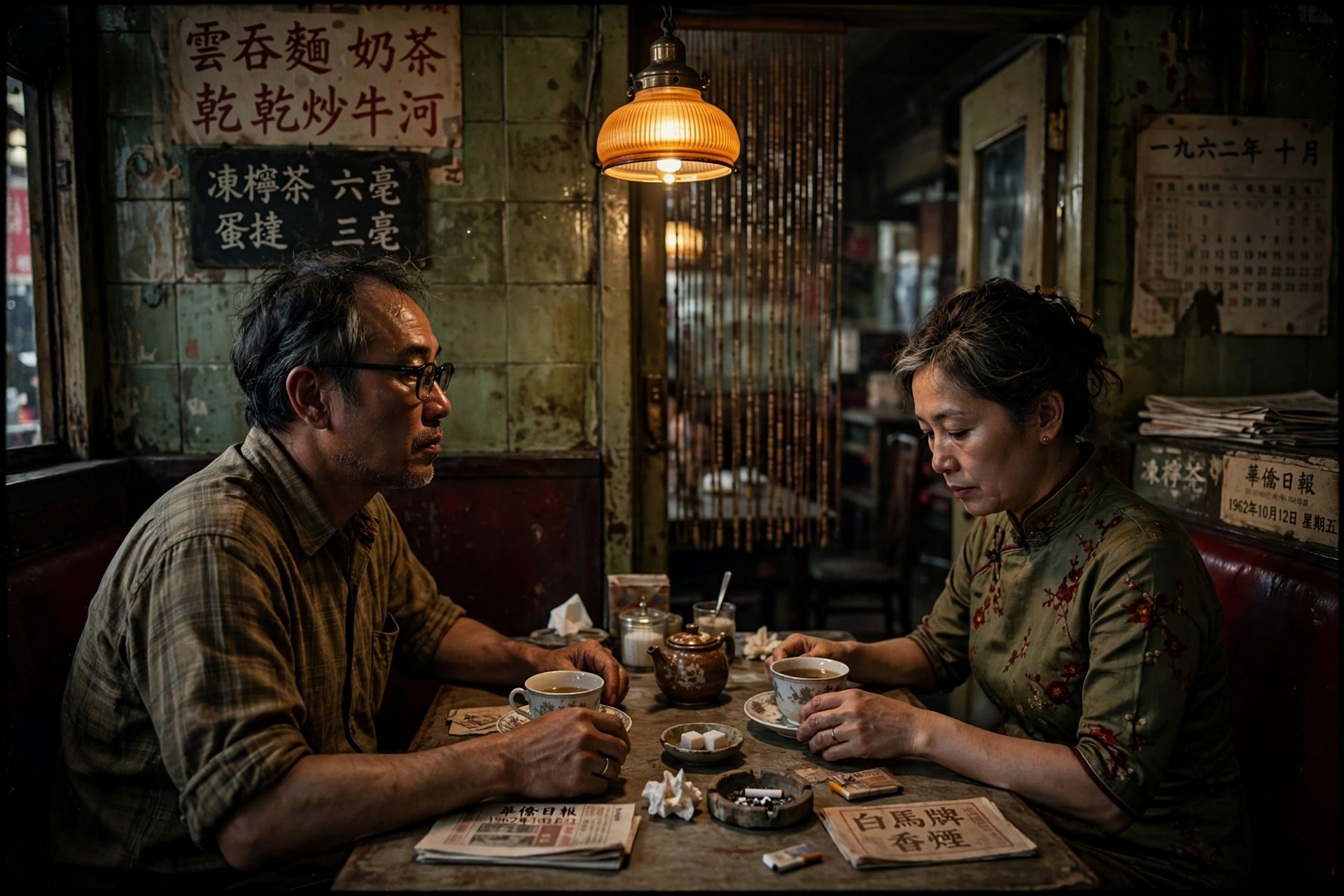
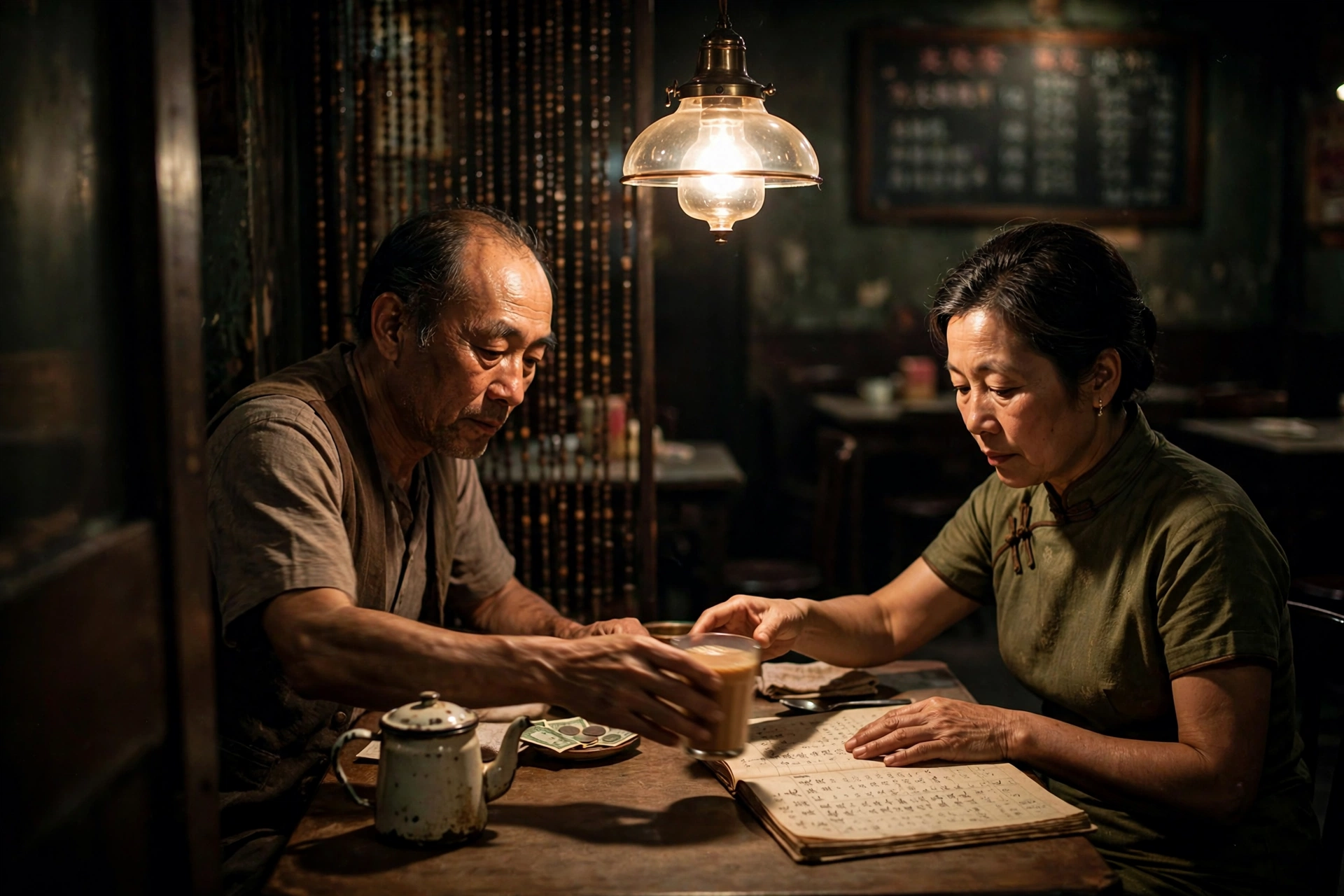
修改说明
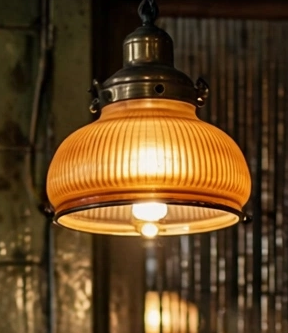
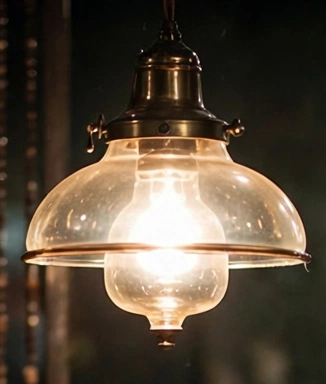
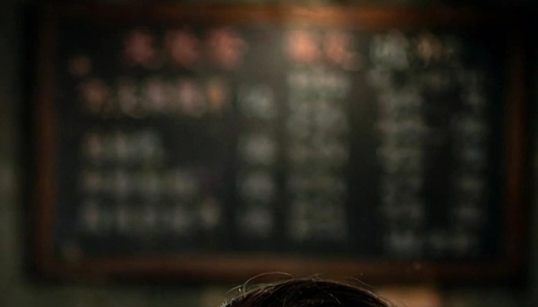
信息层次重构:对坐摆拍改为「推奶茶+按账簿」的具体互动;背景只留一面虚化菜单墙,拆掉日历/招牌/报纸堆砌;吊灯单光源。
局部放大(原生分辨率裁切,左 R3/右 R4)
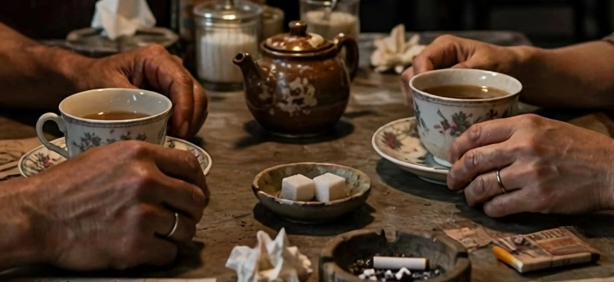
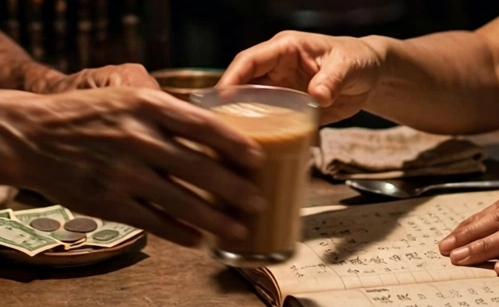
三轴自评
| 真人感 | 过 | 推杯、迎杯、按账簿的连贯互动,双方视线都落桌面,年龄感与疲态真实,无对镜感。 |
| 光线与摄影物理 | 过 | 吊灯居中入画:桌面最亮、人物受光与器物投影均可由灯位解释,背景自然落入暗部。 |
| 摄影成像 | 部分 | 焦平面内账簿手写字清晰可辨——物理位置上成立,但与全图其余部分的柔和度对比仍显数码锐利。 |
候选与淘汰记录摘要
候选 3(一轮 text):r1-1 定版;r1-2 妻子迎杯手悬空、指形异常,r1-3 伸手姿态不自然,淘汰。(逐个记录见随附 screening-log.md)
实际提交的完整提示词
定版(第 1 轮)实际提交的完整提示词全文。
A candid frame from a 35mm narrative motion picture showing a Hong Kong couple in their fifties who run a small tea restaurant, caught mid-action at closing time in their own booth in 1962: the husband is pushing a freshly made cup of milk tea across the table toward his wife, and his wife, one hand pressed flat on an open account ledger, is reaching out with the other hand to take the cup — the gesture half completed, both pairs of hands in motion, medium shot, Hong Kong, 1962. The camera captures an unposed moment within an ongoing scene, from a physically plausible camera position. Lived-in environmental details. The image should feel like a frame extracted from a film, not a promotional portrait, fashion editorial, or carefully arranged photographic set.
CAMERA: a longer roughly 85mm lens from a neighbouring table about three metres away, level and unhurried. The focal plane rests on the tabletop and the couple's hands; their faces sit just behind it, a degree softer. The background is deliberately sparse and deeply out of focus: one menu board far behind them dissolves into unreadable shapes, the beaded curtain behind the booth opens onto darkness and the vague outlines of empty tables — no calendars, no newspapers, no advertising cards, nothing in the background rendered complete or legible.
LIGHT: a single glass-shaded pendant lamp hangs directly above the table and does all the work. The tabletop is the brightest surface in the frame; the tops of their heads and shoulders catch its light while the lower halves of their faces fall away by angle and distance, and the cup and teapot throw clear downward shadows on the table. The back wall receives only the lamp's spill and sits far darker than the table; behind the curtain there is almost no light at all. There is no second source and no fill.
The subject is a believable, ordinary human actor captured during an unposed moment. Natural facial proportions with subtle asymmetry, individual facial structure, understated expressions and physically plausible body posture. Skin texture varies naturally across the face, with subtle imperfections and realistic tonal transitions under the actual scene lighting. The subject is not posing for a portrait. Facial features, hair and clothing must respond consistently to the same physical light sources. The result must resemble an unretouched frame of a real actor photographed on a motion-picture camera, rather than a digitally perfected face. Every visible highlight and shadow must be consistent with a plausible physical light source within the scene. Use motivated practical lighting with natural distance falloff, believable shadow direction and realistic variation in illumination. Different light sources retain their distinct color temperatures and affect nearby surfaces according to their position and intensity. The subject is not artificially brightened by an invisible frontal fill light. Facial shadows may remain underexposed. Brightness and color are determined by the actual lighting environment, not by a global cinematic color overlay. Preserve natural highlight transitions and the imperfect exposure characteristics of a photographed scene. Natural 35mm motion-picture optical rendering. The plane of focus follows the narrative subject, with physically plausible depth-of-field falloff. Fine detail is preserved near the focal plane and gradually softens away from it. Moderate, irregular photochemical grain varies with exposure and shadow density. Subtle optical halation is limited to strong practical highlights. Avoid the appearance of digital clarity enhancement, HDR tone mapping, artificial microcontrast and cosmetic skin retouching. Hong Kong, 1962. A quiet, restrained composition illuminated by a plausible warm practical light source appropriate to the actual location. Deep crimson, olive green, amber and brown exist as distinct colors of fabrics, painted walls and aged architectural surfaces. Warm light falls naturally across faces, with gradual transitions into deep shadow. A longer lens observes the scene from a slightly removed position. A doorway, wall edge or nearby object may partially obstruct the composition when physically appropriate. Human gestures remain small and restrained. The emotional distance between characters is expressed through their positions, empty space and avoided eye contact. Natural optical softness, subtle grain, restrained highlights and quiet atmosphere. One or two warm practical sources do all the work: their light decays softly with distance, and parts of each figure are simply left in shadow — unlit, unfilled, unexplained. Architectural layers separate characters even when they occupy the same room. Warm practical light reveals only fragments of their gestures, leaving emotional tension in the empty space and the parts of the scene outside the camera's view.
拍摄设计记录
# 拍摄设计记录 — C1 茶餐厅夫妻(MODE C / 重构信息层次,文本重生成)

R3 审计:真人感 部分 / 光线 部分 / 成像 部分。死因:画面像年代剧布景——背景日历、招牌、报纸、白马牌香烟广告件件清晰完整、信息堆砌;两人对坐静止近摆拍;吊灯的光没有在人物与桌面上形成可解释的受光与阴影。本轮重构信息层次:先有互动行为,再谈构图。

## 一、人物设计
- 身份:50 多岁亚洲夫妻,1962 年香港一间茶餐厅的东主夫妇,打烊前在自家卡座歇脚。
- 正在做的事(具体互动,有来有往):丈夫正把一杯刚冲好的奶茶推过桌面递到妻子面前;妻子一手按住摊开的记账簿,一手正伸出去接杯——动作进行到一半,两人的手都在动。
- 眼神:丈夫看妻子的手与杯子(在递东西);妻子低头看账簿上的数字(在算账)。谁都不看对方的脸,更不看镜头。
- 双手接触物:丈夫的手接触茶杯;妻子的左手压账簿、右手接杯。
- 重心/姿态:对坐,身体都微微朝桌面倾,重量落在桌沿与手肘上,是干活间隙的松弛姿态。
- 空间关系:卡座在餐厅一角;他们身后是珠帘隔出的后场(暗、空),菜单墙在侧后方远处。

## 二、摄影机设计
- 景别/机位:中景,机位在邻桌位置、略远,平视偏低。
- 焦距/机距:约 85mm 等效长焦,机距约 3m。
- 景深/焦平面:焦平面在桌面与两人的手;两人面部在焦平面附近但略次于手。
- 信息层次(本图整改核心):背景大幅克制——菜单墙只保留一面且深度虚化、字不可读;不出现日历、报纸、香烟广告等可辨识的文字道具堆砌;珠帘后是暗部与空桌椅轮廓。背景道具不许件件清晰完整。

## 三、光源设计
- 主光源:两人正上方一盏玻璃罩吊灯(暖钨丝,约 2700K),是全图唯一光源。
- 脸部明暗:桌面中心受光最强;两人头顶与肩部吃到吊灯的直射,脸的下半部按角度衰减入影;茶杯、茶壶在桌面上投下方向明确的影子(自上而下、略偏离灯的正下方)。
- 衰减/同一空间:背景墙只吃到吊灯余光,明显暗于桌面区;珠帘后空间基本入暗。无第二光源,不许补光。
A1 · 小店门口男子(夜景)
工作流:text-only(全新拍摄设计)
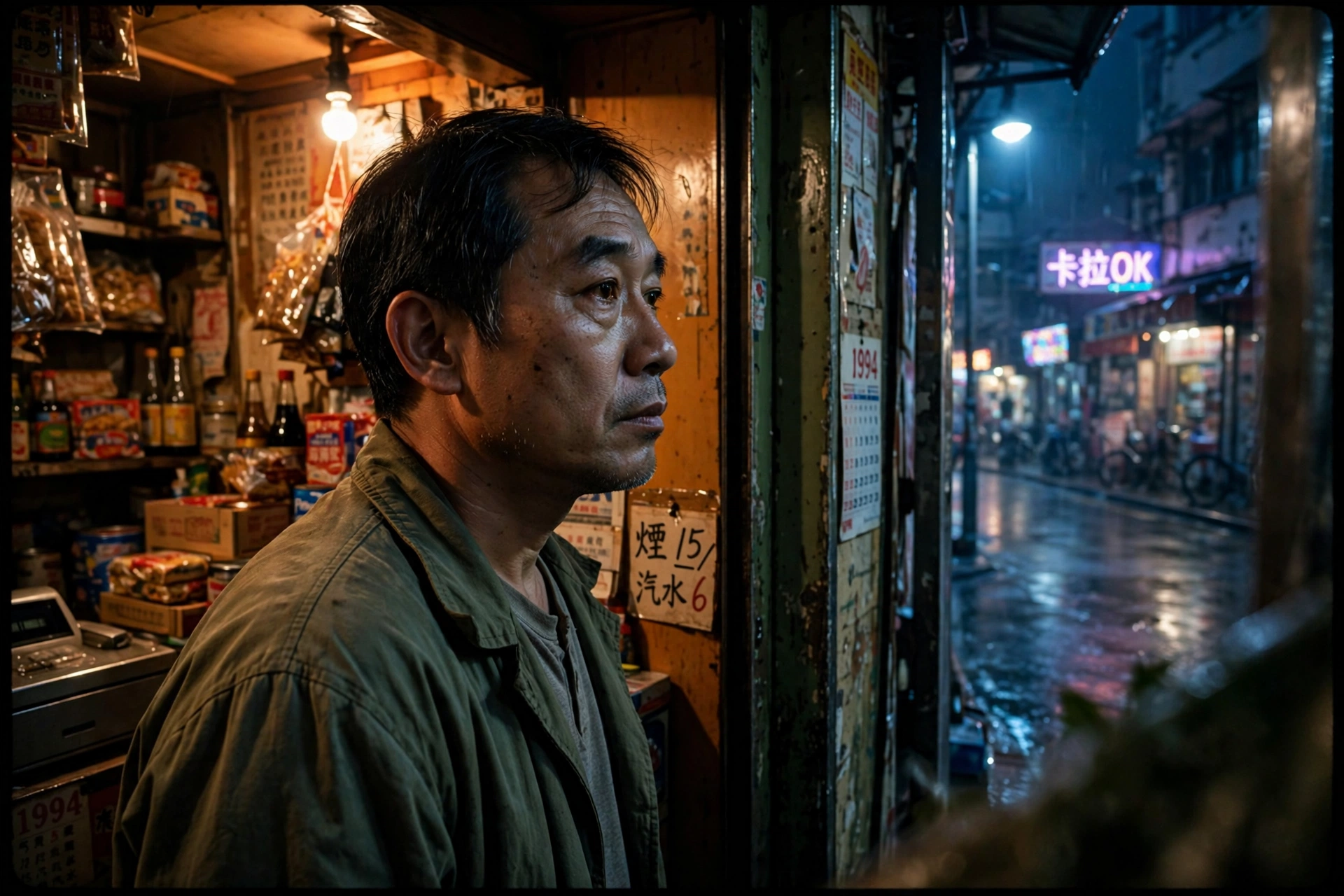
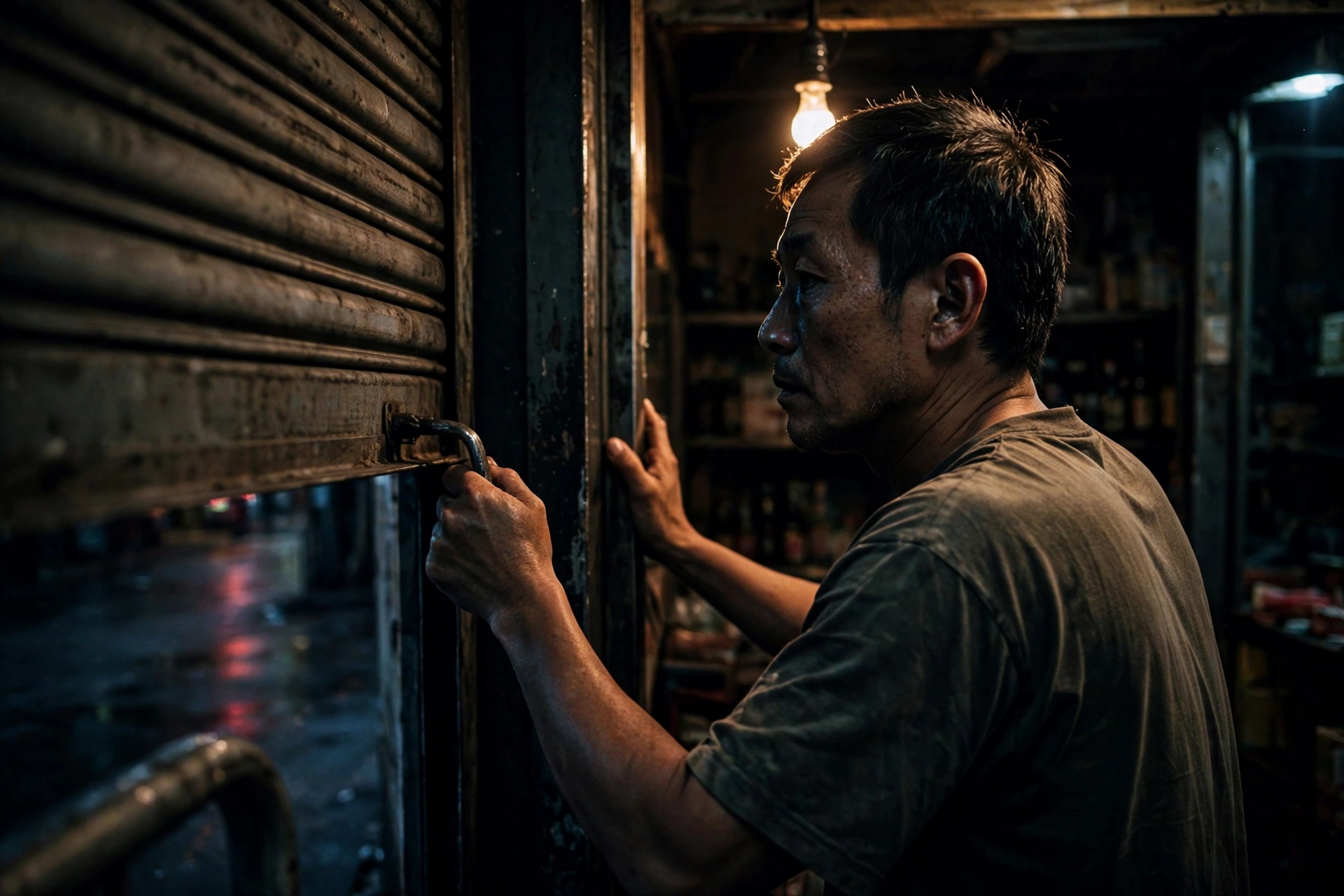
修改说明
行为重设:静止站立摆拍改为打烊拉卷闸门+回望店内;写明店内灯与街道反射对脸部的分区贡献;第二轮容忍暗部近黑、店内商品压成暗形影。
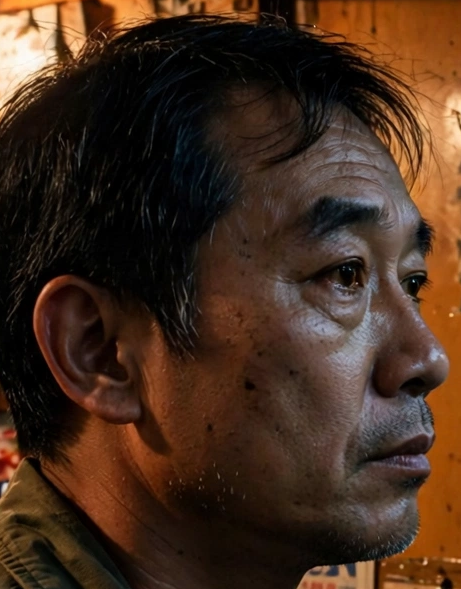
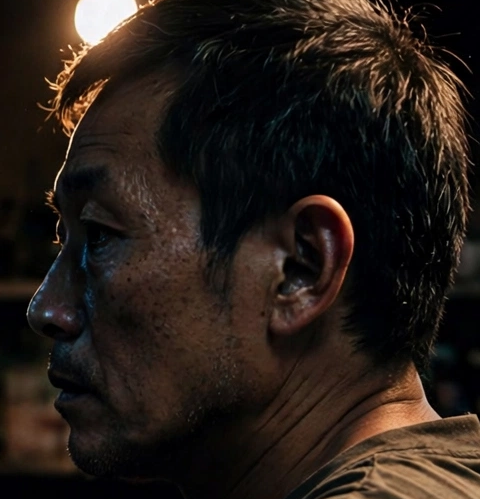
局部放大(原生分辨率裁切,左 R3/右 R4)
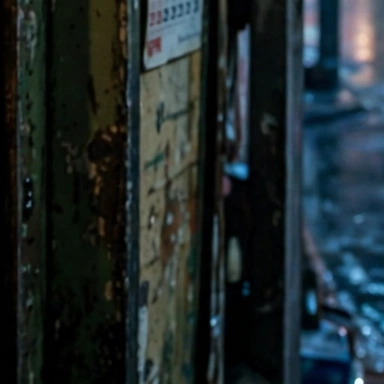
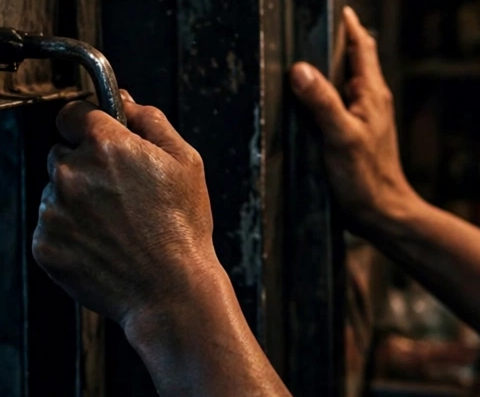
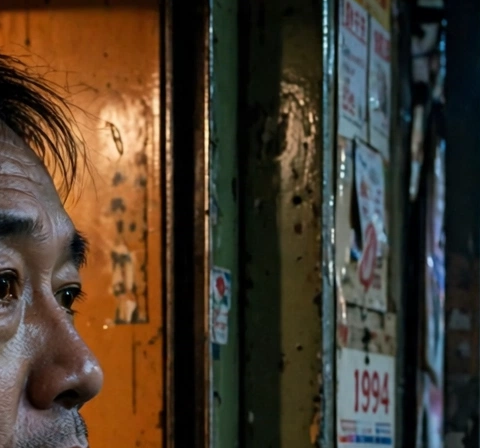
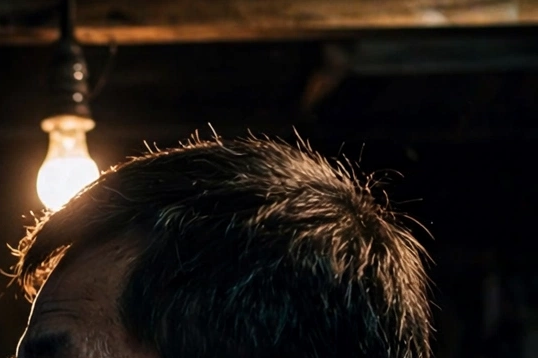
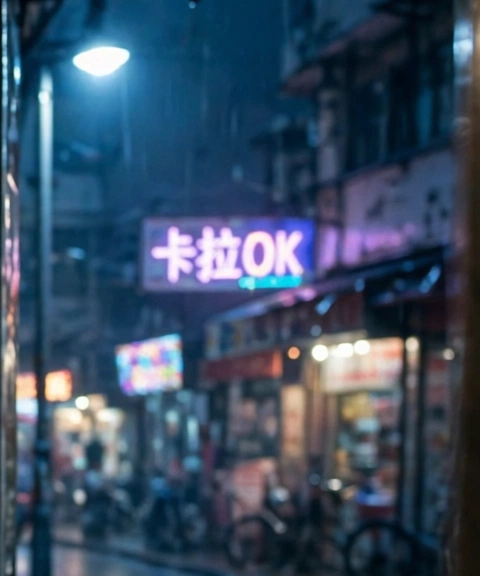
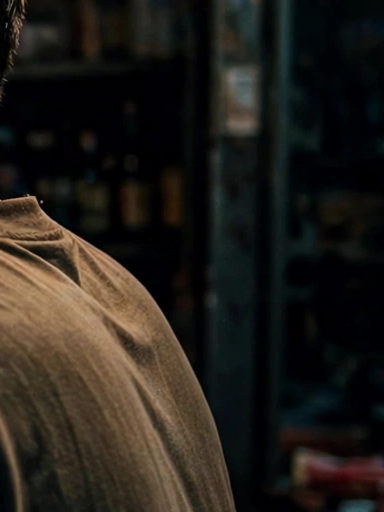
三轴自评
| 真人感 | 过 | 握柄下压、扶框、回望的发力姿态连贯,是正在打烊的人,不是站着的人像。 |
| 光线与摄影物理 | 过 | 店内裸灯泡在头顶后方入画:暖光只落店内侧脸面与发缘,街道侧自然衰减,无补光感。 |
| 摄影成像 | 部分 | 面颊与前臂高光仍偏油亮,皮肤微反差高于衣物——与全轮其他图同类残留。 |
候选与淘汰记录摘要
候选 6(两轮 text):第 1 轮 r1-1 受光均匀、r1-3 动作偏离设计淘汰,r1-2 次选;第 2 轮 r2-3 定版,r2-1 脸跌入近黑可读性过低、r2-2 手持物含混且暗侧脸颊有无源亮斑,淘汰。(逐个记录见随附 screening-log.md)
实际提交的完整提示词
定版(第 2 轮)实际提交的完整提示词全文;第 1 轮版本存 prompts/prompt-a1-r1.txt(差异为文末 ROUND 2 REINFORCEMENT 段)。
A candid frame from a 35mm narrative motion picture showing an Asian grocery-shop keeper in his forties in the middle of closing his small street shop for the night: he stands sideways on the threshold with one hand gripping the pull-handle of the roller shutter, hauling it halfway down, his other hand braced on the door frame, while his head turns back into the shop as if checking whether anyone is still inside, medium shot, Hong Kong, 1994. The camera captures an unposed moment within an ongoing scene, from a physically plausible camera position. Lived-in environmental details. The image should feel like a frame extracted from a film, not a promotional portrait, fashion editorial, or carefully arranged photographic set.
CAMERA: about four to five metres away across the pavement, eye level, a roughly 50mm lens. The focal plane is on the man: the shelves behind him inside the shop soften into blocks of colour and bottle silhouettes, the street behind the camera side falls away into darkness with distance, and one dim sign far down the street survives only as a patch of coloured glow — no readable text anywhere in the frame. A blurred railing corner intrudes at one frame edge without touching his face or hands. The sharpest, densest detail in the whole frame belongs to his gripping hand and his face.
LIGHT: inside the shop, one bare tungsten bulb on the ceiling behind and above him lights the back of his head, the rim of his ear and his shoulders; the shop-facing half of his face picks up only its warm reflection. From above the door on the street side, one cool street lamp lays a weaker cool edge along his street-facing cheek and nose. The two halves of his face therefore belong to two different light sources — warm behind and to the left, cool in front and to the right — with the band between them naturally dark and allowed to stay underexposed; his face is never brighter than his lit shoulder, because his key light is behind him. The wet pavement reflects only the distant sign's weak colour, and that reflection stays on the ground, never on his face. There is no light on the camera side at all.
The subject is a believable, ordinary human actor captured during an unposed moment. Natural facial proportions with subtle asymmetry, individual facial structure, understated expressions and physically plausible body posture. Skin texture varies naturally across the face, with subtle imperfections and realistic tonal transitions under the actual scene lighting. The subject is not posing for a portrait. Facial features, hair and clothing must respond consistently to the same physical light sources. The result must resemble an unretouched frame of a real actor photographed on a motion-picture camera, rather than a digitally perfected face. Every visible highlight and shadow must be consistent with a plausible physical light source within the scene. Use motivated practical lighting with natural distance falloff, believable shadow direction and realistic variation in illumination. Different light sources retain their distinct color temperatures and affect nearby surfaces according to their position and intensity. The subject is not artificially brightened by an invisible frontal fill light. Facial shadows may remain underexposed. Brightness and color are determined by the actual lighting environment, not by a global cinematic color overlay. Preserve natural highlight transitions and the imperfect exposure characteristics of a photographed scene. Natural 35mm motion-picture optical rendering. The plane of focus follows the narrative subject, with physically plausible depth-of-field falloff. Fine detail is preserved near the focal plane and gradually softens away from it. Moderate, irregular photochemical grain varies with exposure and shadow density. Subtle optical halation is limited to strong practical highlights. Avoid the appearance of digital clarity enhancement, HDR tone mapping, artificial microcontrast and cosmetic skin retouching. Warm tungsten practical lamps create uneven pools of amber light across a cramped late-night interior. Faces, walls and background objects occupy different zones of warm amber, muted neutral color and deep brown-black shadow, rather than a uniform orange wash. Shadow detail falls off naturally into darkness. Small reflections appear on worn glass and metal. The camera observes the subject from a slightly removed position, with incidental foreground obstructions and an asymmetrical composition. The subject is absorbed in a private moment, unaware of the camera. Every color difference in the frame is produced by the scene's own mixed light sources — tungsten practicals, street light, a distant sign — each acting at its real position and color temperature, never by a wash laid over the whole image. The emotional focus comes from the unequal distribution of warm practical light, deep environmental shadow, and the subject's isolation within a busy but indifferent surrounding space. The camera records a fleeting private moment rather than arranging the scene around recognizable props.

ROUND 2 REINFORCEMENT (these override any conflicting implication above): Let the street-facing half of his face fall to near-black — visible sources only, absolutely no fill light on the camera side; a partially lost face is correct and wanted. Goods inside the shop behind him sink into dim, soft shapes — low brightness, no saturated colors, no readable packaging anywhere. His skin is matte: no oily sheen on the forehead or cheek; the warm light makes a hard-edged falloff across the face, not a glow. Keep the rest of the design unchanged.
拍摄设计记录
# 拍摄设计记录 — A1 小店门口男子(MODE A / 文本重生成)

R3 审计:真人感 部分 / 光线 部分 / 成像 部分。死因:人静止站在门口侧脸望街、近肖像式摆拍;脸部受光分区不清(暖内冷外的设计没有落实到脸的各区域);招牌、商品、街道细节与人物争抢注意力。保留暖内冷外格局,换掉静止姿态,给行为动机。**禁止额外添加霓虹或烟雾。**

## 一、人物设计
- 身份:40 多岁亚洲男性,街边小杂货店(士多)店主,穿旧衬衫,忙了一天。
- 正在做的事(有明确动机):打烊——他站在店门口,一只手正把卷闸门往下拉到一半,头同时转回店内,像在确认里面还有没有客人、灯关没关。动作进行到一半。
- 眼神:看向店内(行为动机:确认店内情况);不看街道,更不看镜头。
- 双手接触物:右手握住卷闸门的拉手(受力、指节绷紧),左手扶着门框稳住身体。
- 重心/姿态:侧身站在门槛上,重量压在扶门框的一侧,拉闸的肩背在用力。
- 空间关系:他身后是店内货架(暖光区),面前是夜街(冷光区),他正处在两区的交界线上——这正是脸部受光分区的物理依据。

## 二、摄影机设计
- 景别/机位:中景,机位在街对面人行道上,平视。
- 焦距/机距:约 50mm 等效,机距约 4–5m。
- 景深/焦平面:焦平面在他的身上;店内货架在他身后略软、商品只成色块与瓶罐轮廓,不逐件可辨;街道向远处自然衰减变暗,远景招牌只留色光、不成文字。
- 前景:路边栏杆一角可入画虚化,形成一层前景,但不遮挡他的脸与手。
- 细节竞争控制:全图可辨识的文字信息趋近于零;细节密度最高处只能是他的手与脸。

## 三、光源设计
- 主光源一(暖):店内天花一盏裸钨丝灯泡(约 2800K),位于他身后上方——照亮他的后脑、耳廓边缘、肩背,脸的店内侧(左半)吃到它的暖色反射。
- 主光源二(冷):店门右上方一盏街灯(冷白偏青,约 4300K)——给他右脸颊与鼻梁一条冷色边光,强度次于店内暖光。
- 脸部明暗分布(本图必须落实):左半脸暖、右半脸冷,中间过渡带自然偏暗、允许欠曝;脸的亮度不得高于肩背受光面(他背对主光源,脸本就不该亮)。
- 环境反射:湿地面只反射远处招牌的微弱色光,只落在地面与背景,绝不上脸。
- 无任何正面光源;摄影机方向无光。
A2 · 大排档洗碗女工(夜景,原托腮方案废弃)
工作流:text-only(全新拍摄设计)
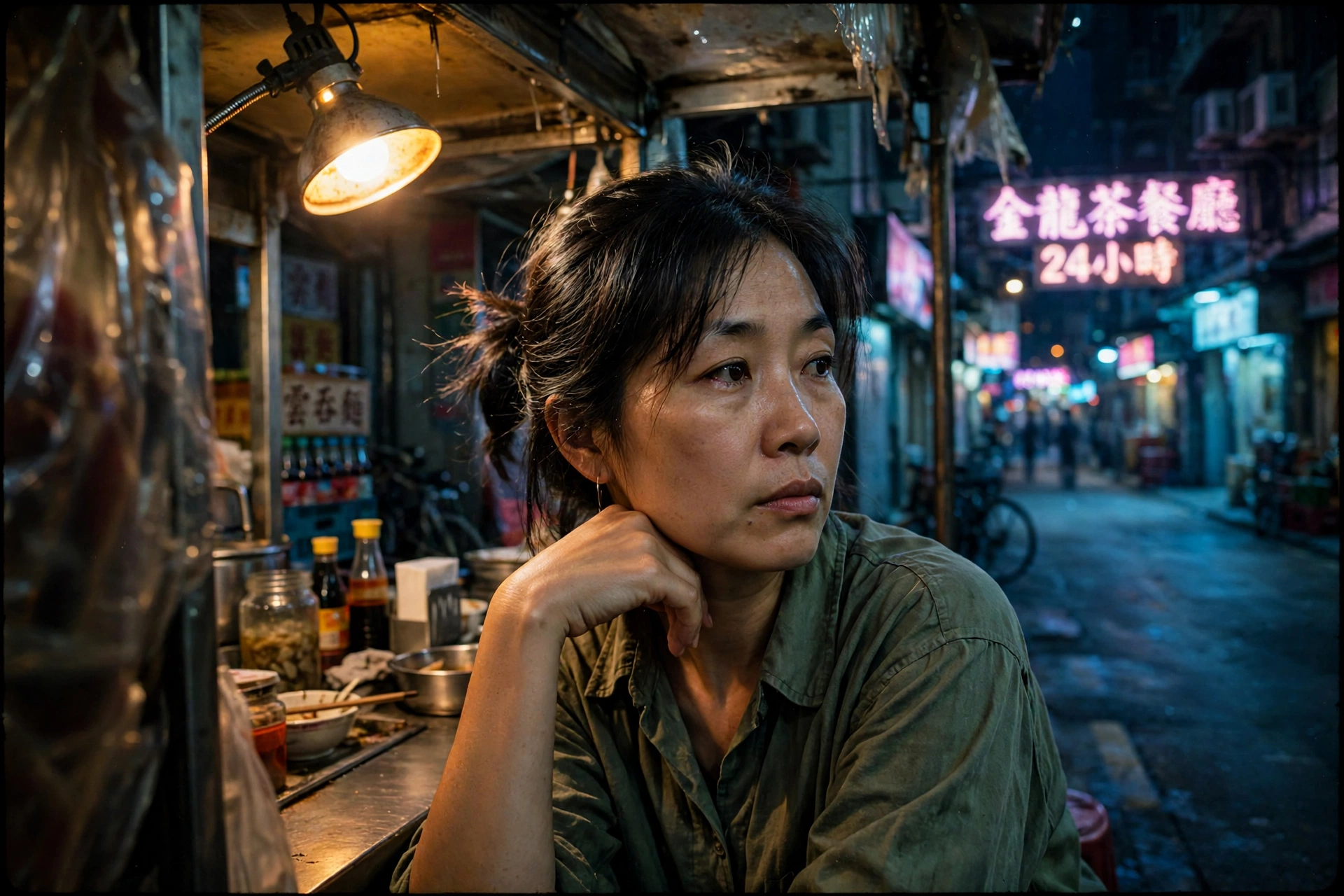
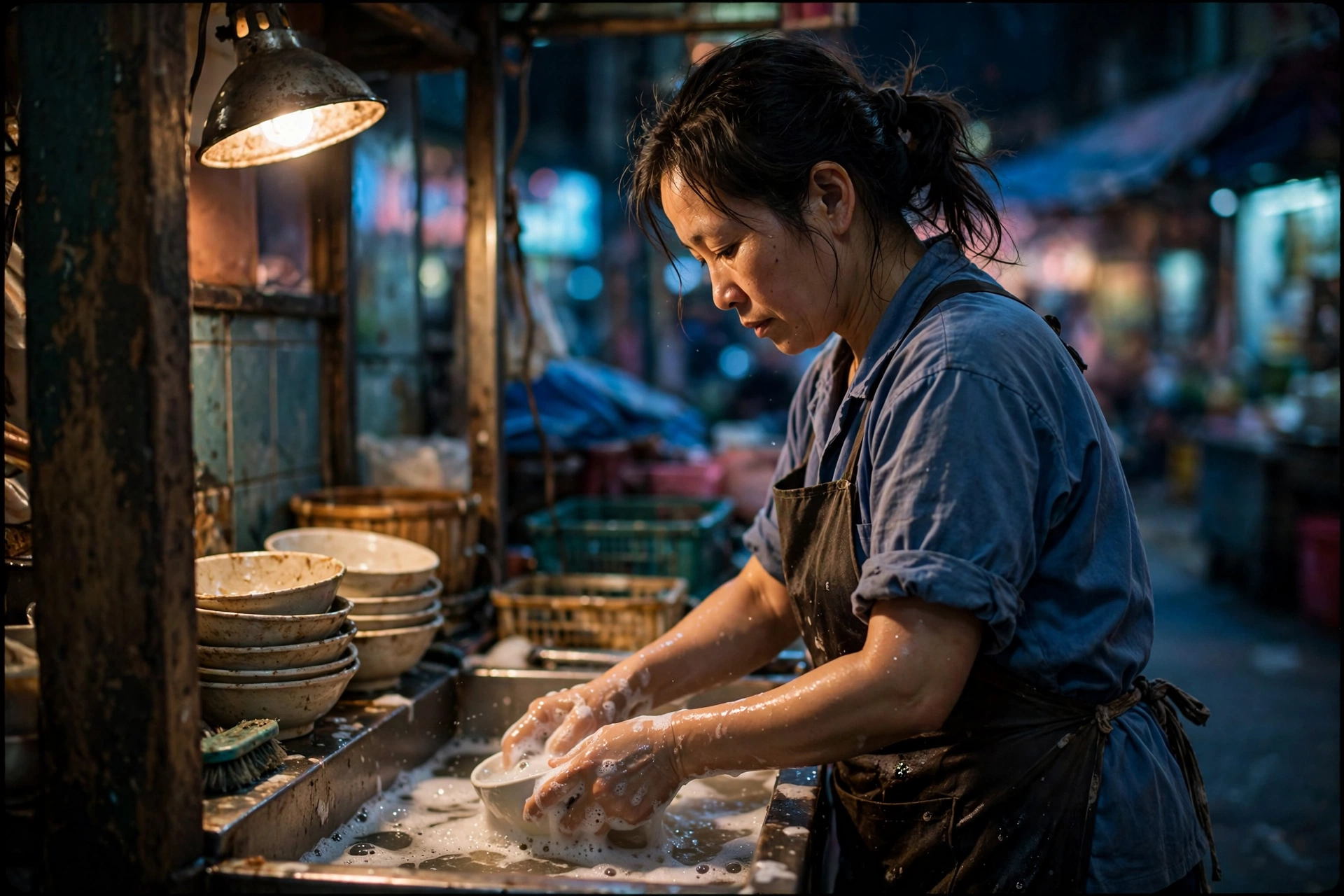
修改说明
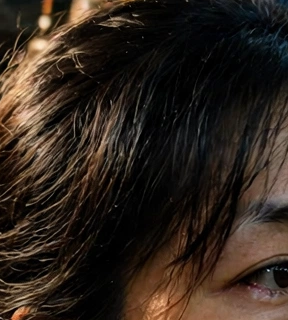
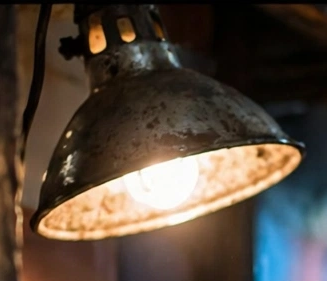
原托腮肖像方案整张废弃。改为摊位洗碗的工作动作,从实际灯位(左上工作灯)重建面部明暗,取消无来源正面柔光。
局部放大(原生分辨率裁切,左 R3/右 R4)
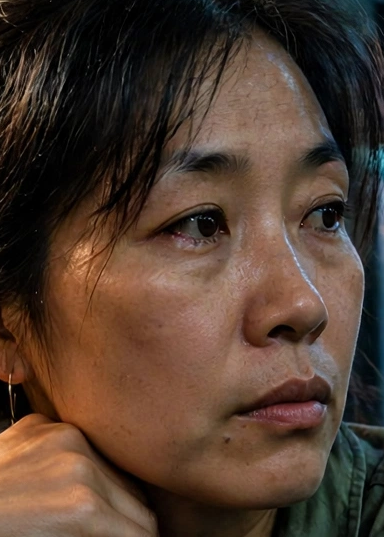
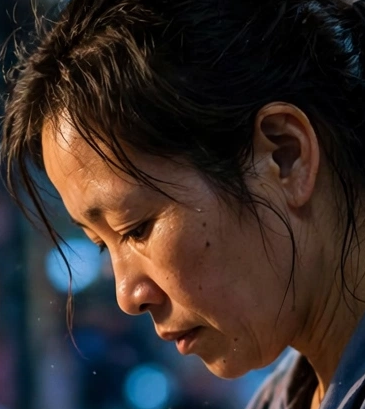
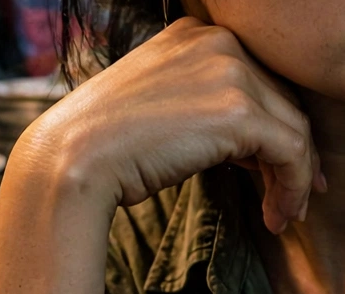
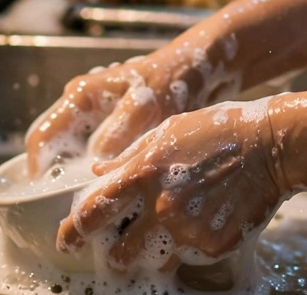
三轴自评
| 真人感 | 过 | 低头看碗、双手在泡沫水中受力刷洗,疲惫的工作状态,无任何肖像姿势——与 R3 托腮图为结构性翻盘。 |
| 光线与摄影物理 | 过 | 工作灯在画面左上完整入画,脸的受光面与湿臂高光都朝向灯位,摄影机侧自然落入暗部。 |
| 摄影成像 | 部分 | 湿皮肤高光呈略均匀发亮的渲染感,泡沫纹理略显整齐——成像层残留与全轮同类。 |
候选与淘汰记录摘要
候选 3(一轮 text):r1-1 定版;r1-2 工作灯只露边缘、光源在场感弱,r1-3 背景人群虚影竞争强,备选淘汰。(逐个记录见随附 screening-log.md)
实际提交的完整提示词
定版(第 1 轮)实际提交的完整提示词全文。
A candid frame from a 35mm narrative motion picture showing an Asian woman in her mid-thirties who washes dishes at an open-air street food stall at night, caught in the middle of her work: she stands side-on at a wash trough at the side of the stall, both hands down in foamy water scrubbing a bowl, head lowered toward her hands, sleeves rolled to the elbows and her apron wet, a stack of unwashed bowls beside the trough, medium shot, Hong Kong, 1994. The camera captures an unposed moment within an ongoing scene, from a physically plausible camera position. Lived-in environmental details. The image should feel like a frame extracted from a film, not a promotional portrait, fashion editorial, or carefully arranged photographic set.
CAMERA: about two and a half metres away at her own height, a roughly 50mm lens. The focal plane is on her and the trough; the street and its signs behind the stall dissolve deeply out of focus into soft patches of light and colour with no readable text. A stall post at one side of the frame forms a physical foreground edge. Her working skin — uneven water sheen, pores and fine lines that answer the light — is rendered without any smoothing, and nothing in the frame is sharper than the focal plane.
LIGHT: one iron-shaded tungsten work lamp hangs about a metre above and to her left and is the only real source: it lights her left cheek, her left shoulder and, brightest of all because they are nearest to it, her hands and the water in the trough. The right half of her face falls off by distance and angle into warm brown shadow and may lose detail; her face is never brighter than her hands. Behind her, the street's cold blue ambient light traces only a faint cool edge along her hair and right shoulder and never reaches her face. The camera side of the scene has no light source whatsoever.
The subject is a believable, ordinary human actor captured during an unposed moment. Natural facial proportions with subtle asymmetry, individual facial structure, understated expressions and physically plausible body posture. Skin texture varies naturally across the face, with subtle imperfections and realistic tonal transitions under the actual scene lighting. The subject is not posing for a portrait. Facial features, hair and clothing must respond consistently to the same physical light sources. The result must resemble an unretouched frame of a real actor photographed on a motion-picture camera, rather than a digitally perfected face. Every visible highlight and shadow must be consistent with a plausible physical light source within the scene. Use motivated practical lighting with natural distance falloff, believable shadow direction and realistic variation in illumination. Different light sources retain their distinct color temperatures and affect nearby surfaces according to their position and intensity. The subject is not artificially brightened by an invisible frontal fill light. Facial shadows may remain underexposed. Brightness and color are determined by the actual lighting environment, not by a global cinematic color overlay. Preserve natural highlight transitions and the imperfect exposure characteristics of a photographed scene. Natural 35mm motion-picture optical rendering. The plane of focus follows the narrative subject, with physically plausible depth-of-field falloff. Fine detail is preserved near the focal plane and gradually softens away from it. Moderate, irregular photochemical grain varies with exposure and shadow density. Subtle optical halation is limited to strong practical highlights. Avoid the appearance of digital clarity enhancement, HDR tone mapping, artificial microcontrast and cosmetic skin retouching. Warm tungsten practical lamps create uneven pools of amber light across a cramped late-night interior. Faces, walls and background objects occupy different zones of warm amber, muted neutral color and deep brown-black shadow, rather than a uniform orange wash. Shadow detail falls off naturally into darkness. Small reflections appear on worn glass and metal. The camera observes the subject from a slightly removed position, with incidental foreground obstructions and an asymmetrical composition. The subject is absorbed in a private moment, unaware of the camera. Every color difference in the frame is produced by the scene's own mixed light sources — tungsten practicals, street light, a distant sign — each acting at its real position and color temperature, never by a wash laid over the whole image. The emotional focus comes from the unequal distribution of warm practical light, deep environmental shadow, and the subject's isolation within a busy but indifferent surrounding space. The camera records a fleeting private moment rather than arranging the scene around recognizable props.
拍摄设计记录
# 拍摄设计记录 — A2 大排档洗碗女工(MODE A / 原方案废弃,全新设计,文本重生成)

R3 审计:真人感 不过 / 光线 不过 / 成像 不过。R3 方案(托腮远望+无来源正面柔光+平滑脸)**整体废弃**,禁止沿用。本轮换成工作中动作:人物在干活,光从实际灯位来,摄影机一侧是暗面。

## 一、人物设计
- 身份:30 多岁亚洲女性,大排档的洗碗帮工,头发扎起、袖子挽到手肘,围裙湿了一片。
- 正在做的事:在摊位侧面的水槽前洗碗——双手在泡沫水里刷一只碗,身体侧对摄影机,头微低看着手里的碗;水槽边堆着待洗的碗碟与一只水桶。动作进行中,不是停下来看什么。
- 眼神:看手里的碗,因为她在洗碗;绝不看镜头、绝不望远方。
- 双手接触物:双手在水里握碗与刷子,手背有水与泡沫。
- 重心/姿态:站姿,重量压在一条腿上,另一脚略歇,上身随刷洗动作微微起伏。
- 空间关系:水槽在摊位侧后方;工作灯在她左上方约 1m;她身后隔着摊位柱子才是街道。

## 二、摄影机设计
- 景别/机位:中景,机位在摊位外侧、与她同高,平视。
- 焦距/机距:约 50mm 等效,机距约 2.5m。
- 景深/焦平面:焦平面在她与水槽;身后街道与招牌深度虚化,只成光斑与色块,不出现可读文字。
- 前景:摊位的一根柱子可在画面一侧形成有物理来源的遮挡边缘。
- 成像要求:工作状态的皮肤——有水汽与油光的不均匀反光、毛孔与细纹服从光线,不平滑、不美颜;全图不得出现比焦平面更锐的区域。

## 三、光源设计
- 主光源:摊位上方一盏带铁罩的工作灯(钨丝,暖,约 3000K),位于她左上方约 1m——照亮她的左脸颊、左肩、双手与水花(亮面集中在左侧与手部)。
- 脸部明暗:右半脸按距离与角度明确衰减,落入暖褐色影里,允许细节丢失;脸的亮度不得超过双手的受光(手离灯更近)。
- 环境反射:身后街道的冷蓝环境光只勾出她发梢与右肩一道极弱的冷轮廓,不照亮脸。
- 正面(摄影机方向)无任何光源:不许出现无来源的正面柔光,这是 R3 本图的死刑条款。
仍未解决的问题(全局)
- 成像轴六图全为「部分」:面部与湿皮肤的高频微反差、高光仍带数码渲染感,与衣物、器物的成像强度不一致。B2 编辑流两轮共 5 次尝试未能压动,疑为当前生成/编辑工具的层级上限。
- 焦平面内文字(C1/C2 的账簿、B1 的柜台纸条)仍可读:物理位置上成立,但与「背景文字抢眼」的旧问题只一步之遥,尺度待外部审计裁定。
- 小面积文字未根除:B1 胸牌类小字、A1 店内深处包装等,当前靠构图压暗处理。
- 按既定规则:六图无一三轴全过,均不计完全合格,产品继续 HOLD。本页为内部自评口径,不替代外部盲审。
生成工具:Muse 媒体生成管线(回执不披露底层模型型号,不虚构)。全部候选、筛选日志与设计记录随产品档案保存于 r4/ 目录。